Hire a Technical SEO Specialist
Hire a Technical SEO Specialist who fixes the foundation — making your site faster, crawlable, and structured so Google can rank every page it should.
Search rankings begin long before content is written. Before Google can rank a page, it must first find it, crawl it, render it correctly, and determine that it loads fast enough to deserve a prominent position. Technical SEO is the discipline that ensures none of those steps fail — and for most websites with more than a few hundred pages, something in that chain is broken.
Also known as
Technical SEO Expert·SEO Technical Consultant·Website SEO Specialist·Technical SEO Analyst
What Does a Technical SEO Specialist Do?
A Technical SEO Specialist manages the infrastructure layer of organic search performance. Their work spans auditing, implementation, monitoring, and ongoing optimization across every technical dimension that affects how search engines discover, crawl, index, and rank a website.
Technical SEO Auditing
Every engagement begins with a comprehensive site audit. The specialist crawls the site with Screaming Frog or Botify, cross-referencing crawler data with Google Search Console to identify discrepancies between crawled and indexed pages, 4xx and 5xx errors consuming crawl budget, redirect chains losing link equity, duplicate content across multiple URLs, and orphaned pages that receive no internal links.
The audit report is a prioritized action plan — not just a list of issues. High-impact problems (pages returning 404 that were previously ranking, conversion pages excluded from the sitemap, duplicate title tags across hundreds of product pages) get immediate attention. Lower-severity issues are queued for systematic resolution over subsequent sprints.
Core Web Vitals & Page Speed Optimization
Google's Page Experience signals — Largest Contentful Paint (LCP), Cumulative Layout Shift (CLS), and Interaction to Next Paint (INP) — are ranking factors that correlate with both search performance and conversion rates. The specialist identifies failing pages using PageSpeed Insights, Lighthouse, and CrUX data, then works with developers to implement specific fixes: image lazy loading and next-gen format conversion, elimination of render-blocking scripts, server-side caching, CDN optimization, and font loading strategies.
On a typical ecommerce site, a 20–30% improvement in LCP score produces measurable ranking improvements within 4–8 weeks of Google re-evaluating the affected pages.
Structured Data & Schema Markup
Schema markup enables rich results in search — star ratings, FAQ accordions, product prices, recipe cards, breadcrumbs, and event listings. The specialist implements appropriate schema types for every page category: Product schema for ecommerce, Article schema with author attribution for editorial content, LocalBusiness schema for service businesses, FAQPage schema for support pages. Properly implemented structured data directly increases click-through rates from search results.
Site Architecture & Internal Linking
How pages link to each other determines how link equity flows through a site and how clearly Google understands the relative importance of different pages. The specialist audits internal linking to identify high-authority pages that are poorly linked internally, conversion-critical pages buried deep in the site hierarchy, and topic silos disconnected from related content. Restructuring internal links often produces ranking improvements without any new content or link building.
Crawl Budget Management
For large sites, Google allocates a finite crawl budget. Wasting it on low-value pages — faceted navigation URLs, printer-friendly versions, parameter duplicates — means high-value pages get crawled less frequently and ranking updates are delayed. The specialist audits crawl budget usage through log file analysis and implements solutions: robots.txt directives, canonical tags, and parameter handling in Search Console.
XML Sitemaps & Robots.txt
XML sitemaps guide Google to pages that should be indexed; robots.txt prevents crawling of pages that should not be. Both are frequently misconfigured. Common errors include sitemaps containing 404 pages and noindexed URLs, and robots.txt files accidentally blocking CSS or JavaScript assets required for rendering. The specialist audits both files, cleans sitemaps to contain only canonical indexable URLs, and verifies robots.txt allows access to all rendering-critical resources.
Log File Analysis
Log files record every request a search engine bot makes to the site — which pages it crawls, how often, and with what response codes. Comparing log data against the crawl architecture reveals which high-priority pages Google is actually visiting versus what the sitemap instructs, where crawl budget is wasted, and whether JavaScript rendering is accessing content correctly. Log file analysis frequently identifies crawl issues that all other tools miss entirely.
Indexation Management
The specialist monitors Google Search Console's Index Coverage report to identify pages excluded from the index: soft 404 errors, pages blocked by robots.txt unintentionally, and pages with noindex tags that should be indexed. They also manage over-indexation — low-value utility pages, paginated archives, and parameter-generated URLs that dilute the site's quality signal without contributing traffic.
Core Technical SEO Specialist Skills
Technical SEO Auditing
CoreConducting comprehensive site crawls using Screaming Frog, Botify, or Sitebulb and cross-referencing with Google Search Console data. Identifying and prioritizing issues including crawl errors, redirect chains, duplicate content, canonical misconfigurations, orphaned pages, and indexation problems. Producing actionable audit reports ranked by ranking impact rather than raw issue count.
Core Web Vitals Optimization
CoreDiagnosing and resolving LCP, CLS, and INP failures using PageSpeed Insights, Lighthouse, and Chrome UX Report field data. Implementing specific fixes: image optimization and lazy loading, render-blocking resource elimination, server response time reduction, CDN configuration, and layout stability improvements for dynamic content elements.
Structured Data & Schema Markup
CoreImplementing and maintaining JSON-LD schema markup across all page templates: Product, Article, FAQPage, LocalBusiness, BreadcrumbList, HowTo, Event, Review, and Organization schemas. Validating with Google's Rich Results Test, monitoring rich result performance in Search Console, and troubleshooting errors that prevent rich snippet eligibility.
Site Architecture & Internal Linking
CoreAuditing and optimizing the internal link graph to ensure link equity flows to high-priority pages, conversion pages are accessible within 2–3 clicks from the homepage, and topic silos are properly interconnected. Identifying orphaned content, authority-wasting redirect destinations, and architectural depth issues for sites of varying sizes.
Crawl Budget Management
CoreAnalyzing server log files to understand Googlebot crawl patterns, identifying pages consuming disproportionate crawl budget without contributing organic traffic, and implementing solutions: robots.txt directives, canonical tags, URL parameter configuration in Search Console, and noindex tags for utility pages. Critical for sites with tens of thousands to millions of URLs.
XML Sitemaps & Robots.txt
CoreAuditing, cleaning, and maintaining XML sitemaps to contain only canonical, indexable, 200-status URLs. Configuring robots.txt to block low-value crawl targets while ensuring all rendering-critical assets remain accessible. Implementing sitemap index files for large sites and monitoring sitemap submission health in Google Search Console.
Indexation Management
CoreMonitoring Google Search Console's Index Coverage report to track indexed, excluded, and error-state pages. Diagnosing and resolving soft 404s, noindex tag misapplication, canonical errors directing Google away from priority pages, and crawl anomalies. Managing the balance between ensuring all valuable pages are indexed and preventing low-quality pages from diluting domain signals.
On-Page Technical Optimization
CoreAuditing and optimizing technical on-page elements at scale across page templates: title tag and meta description uniqueness, header tag hierarchy, canonical tag accuracy, hreflang implementation for multi-language sites, Open Graph metadata, and pagination handling. Ensuring template-level fixes propagate correctly across thousands of dynamically generated pages.
Log File Analysis
CoreParsing and analyzing server access logs to extract Googlebot crawl data. Identifying crawl frequency patterns, pages receiving no crawl attention despite sitemap inclusion, and discrepancies between intended and actual crawl behavior. Log analysis reveals ground-truth indexing behavior that all other SEO tools can only approximate.
Advanced Technical SEO Specialist Skills
JavaScript SEO & SPA Rendering
AdvancedDiagnosing and resolving indexation issues on React, Vue, Angular, and Next.js applications where client-side rendering prevents content discovery. Implementing and validating server-side rendering (SSR), static site generation (SSG), and dynamic rendering strategies. Using Google URL Inspection and log file analysis to confirm Googlebot JavaScript execution.
International SEO & Hreflang
AdvancedImplementing hreflang attributes for multi-language and multi-regional sites to ensure Google serves the correct language version to each audience. Auditing hreflang accuracy, identifying return tag errors and orphaned language variants, and configuring ccTLD, subdomain, and subdirectory international structures.
Site Migration Management
AdvancedPlanning and executing site migrations — domain changes, HTTPS, URL restructures, CMS transitions, and consolidations — while minimizing organic traffic loss. Building URL mapping matrices, validating redirect chains, establishing pre- and post-migration monitoring dashboards, and executing rapid-response plans when traffic anomalies occur post-launch.
Faceted Navigation Optimization
AdvancedManaging duplicate content and crawl budget challenges created by ecommerce filter systems. Determining which facet combinations should be indexable, canonicalized, or blocked. Implementing JavaScript-based URL parameters for non-indexable filters and configuring crawl directives that prevent index bloat.
Edge SEO (CDN-Level Optimizations)
AdvancedImplementing SEO changes at the CDN edge layer through Cloudflare Workers or Fastly — redirect rules, header modifications, HTML injection for structured data — without requiring developer deployments. Enables rapid SEO changes across millions of URLs at enterprise scale.
Advanced SSR/SSG Diagnostics
AdvancedDeep diagnostic expertise with Next.js, Nuxt, SvelteKit, and Gatsby — identifying hydration errors, dynamic route indexation failures, incremental static regeneration configurations, and build-time versus runtime rendering decisions that affect crawlability and content freshness signals.
Technical SEO Specialist Tools & Platforms
Screaming Frog SEO Spider
PrimaryThe industry-standard crawler for comprehensive site audits. Identifies broken links, redirect chains, duplicate content, missing metadata, and canonicalization errors across millions of pages. Integrates with Google Analytics and Search Console for enriched audit data.
Google Search Console
PrimaryThe authoritative source for how Google sees and indexes the site. Used daily to monitor Index Coverage, Core Web Vitals field data, crawl stats, manual actions, and URL Inspection results. Shows actual Googlebot behavior rather than simulated crawler behavior.
Ahrefs
PrimaryUsed for backlink analysis, keyword tracking, and competitive technical benchmarking. Ahrefs' Site Audit module crawls for 140+ technical SEO issues. The Rank Tracker monitors keyword performance changes correlated with technical improvements.
Google PageSpeed Insights / Lighthouse
PrimaryMeasures Core Web Vitals scores, identifies performance bottlenecks, and tracks improvements. Provides both lab (simulated) and field (real user) data. Lighthouse produces detailed opportunity reports quantifying the estimated LCP, CLS, and INP impact of specific fixes.
SEMrush
PrimaryUsed for site audit, keyword tracking, and competitive analysis. SEMrush's Site Audit crawls for 130+ technical issues with severity scoring. Particularly valuable for identifying crawlability issues and structured data problems across large sites.
Botify
PrimaryAn enterprise SEO platform combining crawling, log file analysis, and keyword rank data in one interface. Botify's RealKeywords feature connects crawl data to actual rankings, identifying which technical issues suppress which specific keywords. Powerful for enterprise sites managing millions of URLs.
Sitebulb
PrimaryA desktop crawler with exceptional visualization capabilities for site architecture analysis. Sitebulb's crawl visualizations make internal linking structures, crawl depth distribution, and orphaned content immediately apparent in ways that data tables cannot convey.
OnCrawl
OptionalA cloud-based crawler with strong log file analysis integration. Allows correlation of crawl data with server log data to identify crawl budget waste at scale. Well-suited for enterprise sites where log file volume exceeds desktop tool capacity.
Cloudflare Workers (Edge SEO)
OptionalUsed for implementing SEO changes at the CDN edge without developer deployments — rapid redirect implementation, response header modification, and HTML injection for structured data across millions of pages.
Bing Webmaster Tools
OptionalBing's equivalent of Google Search Console, providing crawl data and indexation reports for the Bing and DuckDuckGo search engines. Represents 8–10% of desktop search market share.
GTmetrix
OptionalPerformance analysis tool with waterfall charts showing exactly how long each page resource takes to load, which resources are render-blocking, and where server response time adds latency. Useful for communicating bottlenecks to development teams.
Search Atlas
OptionalAn all-in-one SEO platform with technical audit, content optimization, and rank tracking. Useful as a secondary audit tool to catch issues that other crawlers miss, and for teams managing technical and content SEO workflows in a unified interface.
Who Needs a Technical SEO Specialist?
Technical SEO specialists deliver the highest relative impact on sites where technical issues are actively suppressing rankings that content quality and backlink authority should already have earned.
Large ecommerce sites are the most common case. A Shopify or WooCommerce store with 5,000+ SKUs almost always has faceted navigation generating thousands of duplicate URLs, product variants creating canonical confusion, and paginated collection pages consuming crawl budget. Without a technical specialist managing these issues, the site's ability to rank is structurally impaired regardless of content quality or backlink count.
SaaS and technology companies with single-page application (SPA) architectures face unique challenges. React, Vue, and Angular frameworks render content client-side in ways that search engine crawlers frequently fail to process correctly. A technical specialist who understands JavaScript SEO — pre-rendering strategies, dynamic rendering, SSR configurations — is essential for ensuring product pages, feature pages, and blog content are actually indexed.
Enterprise websites and publisher sites with thousands of pages need ongoing technical management: crawl budget optimization, sitemap maintenance, structured data audits across templates, and monitoring for regressions as development teams push code changes. A single deployment accidentally blocking CSS in robots.txt can suppress rankings sitewide within days.
Healthcare, legal, and financial services businesses undergoing site migrations need a technical specialist to manage the transition without losing search equity. Site migrations are among the highest-risk SEO events — incorrect redirect mapping, changed URL structures without proper canonicalization, and migrated pages losing internal links have caused 30–70% traffic losses that took 12+ months to recover.
Any business that has seen unexplained organic traffic drops — especially after a Google algorithm update — needs a technical audit. Many drops attributed to algorithm changes are actually technical issues (crawlability regressions, Core Web Vitals failures, structured data errors) that coincidentally worsened around the update period.
How to Evaluate a Technical SEO Specialist
Evaluating a Technical SEO Specialist requires moving beyond certifications and into demonstrated diagnostic ability. The difference between a competent practitioner and a mediocre one produces dramatically different ranking outcomes.
Start with a live audit exercise. Ask the candidate to spend 15 minutes reviewing your site using Google Search Console and their tools, then walk through the three most impactful issues they found. A strong candidate will identify real, specific problems — not generic observations like "your page speed could be improved." They will name specific pages, specific metrics, and explain the ranking mechanism connecting the issue to performance.
Probe Core Web Vitals knowledge in depth. Ask them to explain the difference between LCP, CLS, and INP, and describe the most common causes of each failing. A competent specialist will name specific technical causes: unoptimized hero images causing LCP failures, late-loading third-party scripts causing CLS shifts, heavy JavaScript bundles causing INP delays. They should also explain the difference between lab data (simulated) and field data (real user CrUX measurements), and why they sometimes diverge.
Test JavaScript SEO understanding. Ask how they would diagnose whether Googlebot is correctly rendering a React or Vue application. The correct answer involves: fetching pages through Google's URL Inspection tool to compare Googlebot-rendered HTML against expected content, reviewing log files to confirm Googlebot JavaScript execution, and using the Coverage report to identify pages that are discovered but not properly indexed.
Ask about a site migration they have managed. A specialist who has managed a complex migration reveals both technical depth and the ability to stay calm when rankings temporarily fluctuate during cutover.
Red flags: relying entirely on automated audit tools without explaining the mechanism behind each issue; inability to explain crawl budget; no experience with log file analysis. Green flags: comfort with GSC's Index Coverage and Core Web Vitals reports, familiarity with structured data testing tools, JavaScript rendering diagnostics experience, and a clear framework for prioritizing audit findings by ranking impact.
Mistakes to Avoid When Hiring a Technical SEO Specialist
Pattern failures we see across hundreds of technical seo specialist engagements — and what to do instead.
Hiring on credentials instead of results
Certifications, agency names on a résumé, and tool fluency say nothing about whether a Technical SEO Specialist can move a metric. Ask for specific accounts, the starting state, the ending state, and the specialist's exact contribution. If they can't quantify outcomes, they likely didn't drive them.
Skipping the industry-experience question
Technical SEO Specialists who have worked in your industry compress the ramp from 90 days to 14. The patterns — buyer behavior, seasonality, channel mix, what creative wins — don't transfer across verticals as much as people assume. Always ask for at least one account in or adjacent to your industry.
Vague or absent success metrics
Hiring without defined success criteria is how 6-month engagements end with "we tried a bunch of stuff." Before signing, agree on 2-3 quantitative outcomes tied to your business (CPA at X, revenue lift of Y%, organic traffic to Z), the time window, and what failure looks like. Specialists who push back on this are signaling they don't want accountability.
Underweighting communication and async work habits
Even the best Technical SEO Specialist fails if you can't reach them, get a status update, or read their thinking. Especially for remote engagements, test their async habits explicitly: how do they document work, how often do they update, how do they handle escalation when something breaks. Bad communicators don't get better under pressure.
Over-paying for senior talent on early-stage work, or under-paying for strategic work
Both extremes waste money. A senior Technical SEO Specialist at $150/hr is a poor fit for tactical execution; a $25/hr generalist is a poor fit for setting up tracking, building attribution, or running diagnostics. Match the seniority of the hire to the actual problem — for most growing businesses, the sweet spot is a vetted mid-level specialist at managed-platform rates ($10–$16/hr through EverestX), not the cheapest or most senior option.
No replacement plan if the hire is the wrong fit
~25–30% of first-attempt marketing hires don't work out within 90 days. If your hiring process has no built-in path to replace without re-starting from scratch (re-recruiting, re-interviewing, re-onboarding), the cost of getting it wrong is 6-8 weeks of stalled execution. Build replacement into the engagement up-front, or hire through a platform that includes it by default.
Pricing Comparison
No upfront fees · no hiring fees · no platform fees — clients pay only for hours worked.
Full-time
$10–$12/hr
Mon–Fri, 8 hrs/day · 40 hrs/week
≈ $1,700–$2,100/mo
Part-time
$14–$16/hr
Mon–Fri, 4 hrs/day · 20 hrs/week
≈ $1,200–$1,400/mo
How that compares to freelancers and agencies
| Experience Level | Freelancer | Agency | EverestX |
|---|---|---|---|
Junior Technical SEO Specialist | $35–55/hr $5,600–$8,800/mo | $50–80/hr $8,000–$12,800/mo | $10–$12/hr $1,700–$2,100/mo |
Mid-Level Technical SEO Specialist | $55–85/hr $8,800–$13,600/mo | $80–130/hr $12,800–$20,800/mo | $10–$12/hr $1,700–$2,100/mo |
Senior Technical SEO Specialist | $85–130/hr $13,600–$20,800/mo | $130–200/hr $20,800–$32,000/mo | $10–$12/hr $1,700–$2,100/mo |
Expert Technical SEO Consultant | $130–180/hr $20,800–$28,800/mo | $200–300/hr $32,000–$48,000/mo | $10–$12/hr $1,700–$2,100/mo |
EverestX rate is flat across experience levels — within the band, exact rate depends on the specific talent's background and skills. Part-time engagements available at $14–$16/hr (20 hrs/week).
Common Technical SEO Specialist Challenges We Solve
Stop struggling with these pain points. Our vetted specialists deliver solutions from day one.
Problem
Sitewide traffic drop after a Google algorithm update
Many businesses attribute traffic drops to algorithm changes without investigating whether underlying technical issues — crawlability regressions, Core Web Vitals failures, or structured data errors — are the actual cause. Algorithm updates often surface pre-existing technical problems by raising the quality bar, not by penalizing sites arbitrarily.
Solution
A technical audit conducted immediately after a traffic drop identifies whether the cause is algorithmic or technical. Targeted fixes often recover traffic within the next crawl cycle without waiting for the next algorithm update.
Problem
Crawl budget wasted on low-value URLs
Ecommerce and large content sites frequently generate thousands of parameter URLs and filtered category pages that consume Googlebot's crawl budget. When crawl budget is exhausted on low-value pages, high-priority product and category pages get crawled less frequently — meaning ranking updates are delayed.
Solution
Log file analysis combined with crawl data reveals exactly which URL types consume the most crawl budget relative to their organic value. The specialist implements robots.txt directives, canonical tags, and URL parameter configuration to redirect Googlebot attention toward high-value pages.
Problem
Core Web Vitals failures suppressing rankings
Pages failing Core Web Vitals thresholds — particularly LCP above 2.5 seconds or CLS above 0.1 — are disadvantaged in Google's page experience ranking signal. For competitive queries where content quality is roughly equivalent across top results, Core Web Vitals failures can mean the difference between positions 4–6 and positions 1–3.
Solution
The specialist diagnoses each failing metric specifically, identifying root causes: unoptimized hero images for LCP, late-injected content elements for CLS, or heavy JavaScript execution for INP. They produce a developer-ready implementation brief that quantifies the expected score improvement per recommendation.
Problem
Duplicate content diluting ranking signals
Sites without proper canonical configuration often have the same content accessible via multiple URLs: www vs non-www, HTTP vs HTTPS, trailing slash variants, and session parameters. Search engines split ranking signals across these variants rather than consolidating them on the intended canonical URL.
Solution
The specialist audits canonical tag implementation across all templates, identifies redirect and canonical chain inconsistencies, and implements a consistent canonicalization strategy. The impact on competitive keywords with diluted authority is often visible within 4–8 weeks.
Problem
JavaScript-rendered content not being indexed
SaaS products and modern sites built with React, Vue, or Angular frequently have content that requires JavaScript execution to render — content that Googlebot may or may not process correctly. If key pages rely on client-side rendering without SSR or pre-rendering, content and links may be invisible to search engines.
Solution
The specialist uses Google Search Console's URL Inspection tool to compare Googlebot-rendered page source against expected content, identifies JavaScript-dependent elements that fail to render for crawlers, and recommends the appropriate rendering strategy based on the site's framework.
Problem
Site migration causing permanent traffic loss
Poorly managed migrations — CMS changes, domain changes, URL restructures, HTTPS migrations — are responsible for some of the most severe and long-lasting SEO traffic losses. A single oversight, such as an incorrect redirect map or a robots.txt blocking the new domain during staging, can cost 50–80% of organic traffic with 12+ months to recover.
Solution
The specialist manages migrations with a structured checklist, complete URL mapping, redirect chain validation, pre- and post-launch monitoring dashboards, and a rapid-response plan. They monitor Search Console and analytics daily for the first four weeks post-launch.
Problem
Missing or broken schema markup losing rich result eligibility
Rich results — star ratings, FAQ accordions, product prices, how-to steps — significantly increase click-through rates from search results. Sites without properly implemented structured data, or with schema errors failing Google's validation, miss these SERP enhancements and yield clicks to competitors who display richer result formats.
Solution
The specialist audits schema using Google's Rich Results Test and Search Console Enhancements reports, identifies pages eligible for rich results lacking schema, fixes validation errors in existing markup, and implements new schema types across site templates.
Problem
Orphaned pages receiving no crawl or link equity
Publishing content without internal links pointing to it creates orphaned pages — pages that exist in the CMS but are effectively invisible to both users and search engines. They receive minimal crawl attention, accumulate no internal link equity, and rank poorly even for low-competition queries.
Solution
A crawl audit identifies every page with zero or very few internal links. The specialist develops an internal linking plan integrating new and existing pages into the site architecture, prioritizing pages that deserve equity flow from high-authority hubs.
Technical SEO Specialist vs Agency: Quick Comparison
Should you hire a dedicated Technical SEO Specialist or outsource to an agency? Here is how the two approaches compare across the dimensions that matter most. For a deeper analysis, read our full Technical SEO Specialist vs agency comparison.
Detailed Comparison
See how EverestX stacks up against hiring a freelancer or working with an agency.
| Dimension | Freelancer | Agency | EverestX |
|---|---|---|---|
Monthly Cost (Mid-Level) | $8,800–$13,600/mo | $12,800–$32,000/mo | $1,700–$2,100/mo full-time · $1,200–$1,400/mo part-time |
Technical Depth | High — dedicated specialist with singular focus | Variable — often shared across accounts, junior-heavy | High — pre-vetted specialist, replacement guarantee |
Emergency Response Time | Same day — direct communication | 24–48 hours — account manager escalation | Same day — direct specialist access |
Site Knowledge Over Time | Excellent — builds deep contextual knowledge | Variable — team turnover resets context regularly | Excellent — dedicated engagement structure |
Multi-Channel Coordination | Technical only — separate hires for content and links | Full-service under one contract | Technical-focused; can complement broader team |
Accountability | Direct — specialist owns results | Mediated through account management layers | Direct + EverestX performance oversight |
How EverestX Works
A streamlined process to get you from requirement to results in days, not months.
Tell Us What You Need
Submit your role requirements, budget, and timeline. Our team reviews every request to understand your exact needs.
Get Matched in 48 Hours
We match you with pre-vetted specialists from our talent pool. Review profiles, skills, and availability before deciding.
Start Working Together
Your specialist is onboarded with managed support. We handle contracts, payments, and ongoing quality assurance.
Technical SEO Specialist Hiring FAQs
What does a Technical SEO Specialist do?
A Technical SEO Specialist manages the infrastructure layer of organic search performance. Their work focuses on ensuring search engines can find, crawl, render, and index a website correctly — and that its technical performance meets the quality standards required to compete for top rankings. This includes conducting site audits, fixing crawl errors and redirect issues, optimizing Core Web Vitals, implementing structured data schema, managing XML sitemaps and robots.txt, analyzing server logs to understand Googlebot behavior, and diagnosing JavaScript rendering issues on modern web applications.
How is technical SEO different from regular SEO?
SEO broadly covers three pillars: technical (site infrastructure), on-page (content and keyword optimization), and off-page (link building and authority). Technical SEO specifically focuses on the infrastructure that determines whether search engines can access and evaluate a site correctly — regardless of content quality or link authority. A site with excellent content and strong backlinks can still rank poorly if technical issues prevent Googlebot from crawling key pages, if Core Web Vitals failures disadvantage it in page experience ranking, or if duplicate content fragments its authority across multiple URLs.
How long does a technical SEO audit take?
A thorough audit of a small-to-medium site (under 10,000 pages) typically takes 20–40 hours, including crawl data collection, Search Console analysis, manual page review, and prioritized recommendation report production. Enterprise sites with hundreds of thousands of pages and complex crawl architectures require 40–80+ hours for a comprehensive audit. Most specialists also conduct a rapid triage audit of 8–12 hours for clients who need critical issues identified immediately before a full audit is completed.
What are Core Web Vitals and why do they matter for SEO?
Core Web Vitals are Google's user experience metrics that became ranking signals in 2021. They measure: LCP (Largest Contentful Paint — how quickly the main content loads, threshold: under 2.5 seconds), CLS (Cumulative Layout Shift — visual stability, threshold: under 0.1), and INP (Interaction to Next Paint — responsiveness to user input, threshold: under 200ms). Pages passing all three thresholds receive a positive page experience signal. For competitive queries where content quality is similar across top results, Core Web Vitals performance influences whether pages rank in positions 1–3 versus 4–6.
Do I need a technical SEO specialist if I already have an SEO agency?
Most SEO agencies focus primarily on content and link building, with technical SEO handled by a generalist analyst who conducts audits but may lack deep implementation expertise. If your site has specific technical challenges — JavaScript rendering issues, enterprise-scale crawl budget management, a pending site migration, or persistent Core Web Vitals failures — a dedicated technical specialist will diagnose and fix issues more thoroughly than an agency generalist. Many businesses run both: an agency for content and link strategy, and a specialist for technical implementation.
How much does a technical SEO audit cost?
Technical SEO audits are typically priced by site size and complexity in the broader market. Small site audits (under 5,000 pages) range from $1,500–$5,000. Mid-size site audits (5,000–50,000 pages) range from $5,000–$15,000. Enterprise audits (50,000+ pages) range from $15,000–$50,000+. Through EverestX, audits and ongoing retainers are billed hourly: $10–$12/hr full-time (~$1,700–$2,100/mo) or $14–$16/hr part-time (~$1,200–$1,400/mo), with the rate within each band depending on experience and skills. So the total cost scales with the actual hours required — typically a fraction of fixed-scope audit pricing for the same work. No upfront, hiring, or platform fees.
What technical SEO issues cause the most ranking damage?
The highest-impact technical issues ranked by severity: (1) pages accidentally blocked by robots.txt or noindex tags — can suppress rankings to near-zero immediately; (2) incorrect canonical tags pointing to wrong URLs — fragments authority across variants; (3) Core Web Vitals failures on competitive pages — disadvantages against equivalent content; (4) JavaScript rendering failures — makes entire page categories invisible to search engines; (5) crawl budget waste on low-value URLs — delays ranking updates on priority pages. Any of these on high-priority pages warrants immediate specialist attention.
Can technical SEO issues cause a Google penalty?
Most technical SEO issues cause algorithmic ranking suppression rather than manual penalties. Google's manual actions are typically reserved for intentional spam, cloaking, or unnatural link schemes. However, technical issues can trigger algorithmic quality signals that suppress rankings across an entire domain — excessive duplicate content, poor Core Web Vitals sitewide, or thin pages consuming crawl budget. These suppressions can look and feel like penalties but are resolved through technical fixes rather than reconsideration requests.
How long does it take to see results from technical SEO fixes?
Timeline depends on how frequently Google recrawls and re-evaluates the fixed pages. Critical fixes on well-crawled domains can produce ranking improvements within 1–2 weeks. For smaller sites crawled less frequently, expect 4–8 weeks. Core Web Vitals improvements take slightly longer — Google uses CrUX field data collected over a 28-day rolling window, so performance improvements reflect in ranking signals approximately 4 weeks after fix deployment.
What is the difference between technical SEO and web development?
Web development builds and maintains the site's code and infrastructure. Technical SEO interprets how search engine crawlers interact with that infrastructure and recommends changes to optimize for crawlability, indexation, and ranking performance. Technical SEO specialists need enough web development literacy to communicate requirements to developers clearly — understanding HTTP status codes, JavaScript rendering, server configuration, and CMS architecture — but they typically do not write production code themselves.
Do I need ongoing technical SEO or just a one-time audit?
A one-time audit identifies existing issues and produces a remediation roadmap, but technical SEO requires ongoing management. Every code deployment introduces potential regressions — a developer update accidentally adding noindex to hundreds of pages, an image script introducing CLS, or a new feature creating thousands of parameter URLs. Most businesses benefit from an initial audit engagement followed by a reduced monthly retainer for monitoring and incremental optimization.
How does schema markup help SEO rankings?
Schema markup does not directly boost rankings — Google has stated that structured data is not a ranking factor. However, it indirectly improves organic performance in two ways: first, by enabling rich results (star ratings, FAQ accordions, product prices) that significantly increase click-through rates from search results; second, by providing explicit semantic signals that help Google understand page content more accurately. For ecommerce and local businesses especially, Product and LocalBusiness schema with Review markup can dramatically improve CTR from search results.
More Ways to Get Technical SEO Specialist Help
Different intents, different pages — same vetted talent network underneath.
Buy it as a service
Technical SEO Specialist as a Managed Service
If you'd rather buy a service outcome than hire a person, see our technical seo specialist done-for-you service page.
Learn moreCompare alternatives
Best Technical SEO Specialist Agencies & Alternatives (2026)
Honest comparison of the top technical seo specialist vendors — EverestX vs Toptal vs Upwork vs agencies.
Learn moreCost & Pricing
Top Cities
- Technical SEO Specialist in New York
- Technical SEO Specialist in Los Angeles
- Technical SEO Specialist in Chicago
- Technical SEO Specialist in Houston
- Technical SEO Specialist in Austin
- Technical SEO Specialist in San Francisco
- Technical SEO Specialist in Seattle
- Technical SEO Specialist in Denver
- Technical SEO Specialist in Boston
- Technical SEO Specialist in Miami
Industries
- Technical SEO Specialist for E-commerce & DTC
- Technical SEO Specialist for SaaS & Technology
- Technical SEO Specialist for Healthcare & Medical
- Technical SEO Specialist for Finance & Fintech
- Technical SEO Specialist for Education & EdTech
- Technical SEO Specialist for Real Estate
- Technical SEO Specialist for Travel & Hospitality
- Technical SEO Specialist for Agency & Consulting
- Technical SEO Specialist for B2B Services
- Technical SEO Specialist for Consumer Products & CPG
- Technical SEO Specialist for Media & Entertainment
- Technical SEO Specialist for Nonprofit & NGO
Related Roles
Real clients, real outcomes
Hear it from teams
we work with.
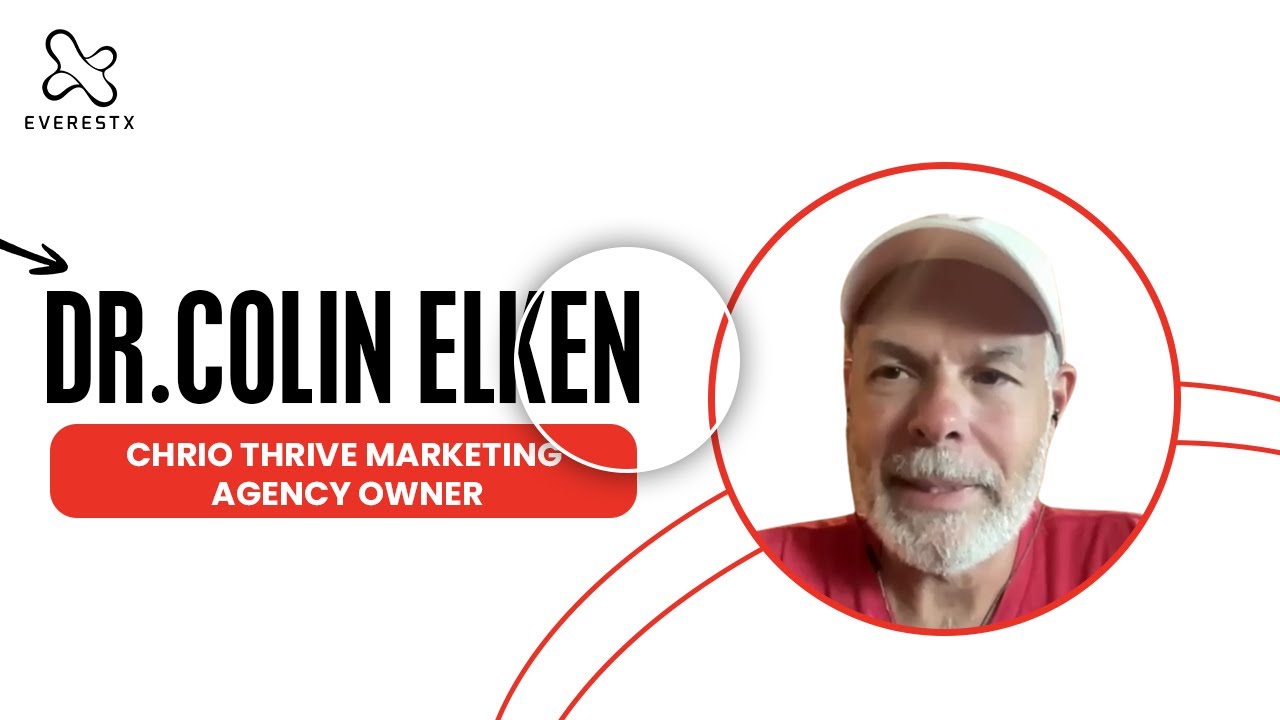
“He really acts as if he’s a part owner of the company. Owns up to mistakes right away, corrects them, and has done some wonderful work for us — frankly, helped us grow.”
Dr. Colin Elken
Agency Owner, Chirothrive Marketing Agency
Hired: Digital Marketing Specialist (Full-Time)

“He was a great team member with us for the last year. Definitely knows digital ads — very responsive and committed throughout.”
Jerry Martinez
President, Sunray Media Consultants
Hired: Performance Marketing Specialist (Full-Time)

“Saved us a ton of time on screening. The person they sent came in ready and picked up our stack fast — has been delivering consistently since week one.”
Rishi Patel
Senior Talent Operations Manager, RippleMatch
Hired: Paid Ads Specialist (Part-Time)
Tutorials
Want to do this yourself? Here is how
Free, step-by-step tutorials covering the tools this role works in. If at any point you would rather hand it off, our specialists are above.
Google Search Console
When to hire an SEO specialist — an honest checklist for site owners
DIY SEO works longer than DIY ads — you can run on momentum for 12+ months. But there's a point where you're losing more in opportunity than you'd pay a specialist. Here's how to tell which side you're on.
WordPress
When to hire a WordPress marketing specialist — an honest framework
WordPress is the easiest CMS to start with and the easiest to make a mess of by month 18. This is the honest framework for when DIY becomes the bottleneck and a specialist pays for themselves.
Ahrefs
When to hire an Ahrefs specialist — the honest checklist
You're paying $249-449/mo for Ahrefs. The question isn't whether the tool is worth it — it's whether you're using more than 10% of it. This is the honest decision framework.
Webflow
When to hire a Webflow specialist — an honest checklist
DIY Webflow is great for the first 6 months — the visual editor really is that good. After that, the math usually flips. This is the honest framework: when self-managing costs more than hiring help.
Ready to Hire a Technical SEO Specialist?
Get matched with a vetted Technical SEO Specialist in 48 hours. Try 1 week risk-free — no charge if not the right fit.
48-hour match guaranteed · Replacement at no cost · Cancel anytime