Hire a Senior Performance Marketing Manager
Hire a Senior Performance Marketing Manager Who Turns Multi-Channel Ad Budgets Into Predictable Growth
Individual channel specialists optimize campaigns. A Senior Performance Marketing Manager optimizes the entire paid acquisition engine. This is the strategic leader who decides where your budget goes across Google, Meta, LinkedIn, TikTok, Amazon, and programmatic — not based on platform loyalty, but on where each marginal dollar produces the most profitable growth. They build the measurement frameworks that prove incrementality, design the testing roadmaps that uncover new growth levers, manage the specialists who execute daily, and report to the C-suite in language that connects marketing spend to business outcomes. Without this role, companies end up with channel-level optimization but portfolio-level chaos: each platform looks efficient in isolation while the overall marketing program underperforms.
Also known as
Head of Paid Media·VP of Performance Marketing·Director of Paid Acquisition·Performance Marketing Lead
What Does a Senior Performance Marketing Manager Do?
A Senior Performance Marketing Manager is a strategic leader, not a campaign operator. Their primary responsibility is the profitable deployment of the company's entire paid media budget — typically $100,000 to $1,000,000+ per month across multiple channels — with accountability for customer acquisition cost, pipeline contribution, revenue growth, and ultimately, the marketing P&L.
The role begins with channel strategy. They evaluate which platforms deserve budget based on customer acquisition economics, audience composition, competitive landscape, and growth stage. This is not a one-time decision; it is a continuous rebalancing as channel performance shifts, new platforms emerge, and the business's needs evolve. A Senior Performance Marketing Manager might allocate 50% to Google Search, 25% to Meta, 15% to LinkedIn, and 10% to programmatic — then shift that allocation monthly based on marginal return analysis.
Budget ownership is the defining responsibility
Unlike channel specialists who manage their allocated budgets, this role owns the total number and decides how to distribute it. They build financial models that connect ad spend to customer acquisition, LTV projections, and revenue forecasts. They present these models to the CEO, CFO, and board to justify investment levels and demonstrate ROI. When the budget needs to grow, they make the business case. When it needs to be cut, they decide where to reduce with minimal growth impact.
Team management is central
A Senior Performance Marketing Manager typically manages 3-8 specialists (or agency relationships) across Google, Meta, LinkedIn, Amazon, and other channels. They set goals, define processes, conduct performance reviews, and create development plans. They also make hiring and firing decisions — knowing when the team needs a dedicated TikTok specialist versus when to fold that channel into an existing role.
Measurement architecture is where this role has the most technical depth
They design and implement the attribution systems, experimentation frameworks, and reporting infrastructure that enable data-driven decision-making. This includes selecting attribution models (last-click, multi-touch, data-driven), configuring analytics platforms, establishing conversion tracking standards, and — critically — designing incrementality tests that measure the true lift from advertising rather than relying on platform-reported conversions that overcount.
Cross-functional collaboration fills the remaining time
They work with product marketing on positioning and messaging strategy, with sales on lead quality feedback and pipeline alignment, with finance on budget planning and forecast accuracy, with engineering on tracking implementation and data pipelines, and with creative teams on ad asset development and testing priorities.
The senior qualifier matters. A mid-level performance marketing manager may handle some of these responsibilities, but a senior leader brings pattern recognition from managing tens of millions in ad spend, the credibility to push back on CEO requests with data, and the strategic thinking to know when channel-level optimization has plateaued and systemic changes are needed.
Core Senior Performance Marketing Manager Skills
Channel Strategy & Selection
CoreEvaluates and selects which paid media channels deserve investment based on customer acquisition economics, audience alignment, competitive landscape, and business stage. Continuously rebalances channel mix as performance data accumulates and business needs evolve, rather than defaulting to familiar platforms.
Budget Ownership ($100K+/mo)
CoreManages total paid media budgets of $100,000 to $1,000,000+ per month, deciding allocation across channels, campaigns, and growth initiatives. Builds financial models that connect spend to customer acquisition, revenue, and profitability, and presents budget recommendations to C-suite leadership.
KPI Framework Design
CoreDefines the metrics hierarchy that the entire marketing organization uses to measure success. Establishes primary KPIs (CAC, LTV/CAC, payback period), supporting metrics (channel-level CPA, ROAS, pipeline contribution), and leading indicators (CTR, conversion rate, lead quality scores) in a framework that connects daily execution to business outcomes.
Team Management & Mentorship
CoreLeads teams of 3-8 channel specialists, setting goals, defining processes, conducting performance reviews, and developing career paths. Makes hiring decisions, identifies skill gaps, and determines when to add new channel-specific roles. Builds a team culture that balances rigorous accountability with creative experimentation.
Executive Reporting & Storytelling
CoreTranslates complex marketing data into clear narratives for CEO, CFO, and board-level audiences. Presents monthly and quarterly business reviews that explain what happened, why it happened, and what the team is doing about it. Frames marketing investment in business language — revenue, margin, customer economics — not platform jargon.
Growth Modeling
CoreBuilds quantitative models that forecast the relationship between ad spend, customer acquisition, and revenue growth. Models saturation curves, marginal return on ad spend, and the point of diminishing returns for each channel. Uses these models to set realistic growth targets and justify budget requests.
Cross-Channel Attribution
CoreDesigns and implements attribution systems that accurately credit conversions across multiple touchpoints and channels. Moves beyond last-click attribution to multi-touch and data-driven models, reconciles conflicting platform-reported data, and builds a unified view of customer acquisition that reflects reality rather than platform self-reporting.
Vendor & Agency Management
CoreEvaluates, selects, and manages external agencies, freelancers, and technology vendors. Defines SOWs, sets performance standards, conducts regular reviews, and makes the strategic decision about which functions to keep in-house versus outsource based on cost, quality, and flexibility considerations.
Testing & Experimentation Roadmaps
CoreDesigns a systematic testing program across channels, audiences, creative, and landing pages. Prioritizes experiments based on potential impact and effort, ensures proper test design for statistical validity, and creates a culture where decisions are driven by experimental evidence rather than opinion or platform recommendations.
P&L Impact Analysis
CoreConnects marketing spend to business-level profitability, not just lead or customer counts. Analyzes how customer acquisition cost, channel mix, and campaign performance affect gross margin, contribution margin, and operating profit. Ensures marketing investment drives profitable growth, not just revenue growth at any cost.
Advanced Senior Performance Marketing Manager Skills
Marketing Mix Modeling
AdvancedImplements statistical models that measure the impact of each marketing channel on total business outcomes, accounting for external factors like seasonality, competitive activity, and economic conditions. Uses MMM to make budget allocation decisions that complement platform-level attribution data.
Incrementality Testing
AdvancedDesigns and executes experiments that measure the true incremental impact of advertising: geo holdout tests, conversion lift studies, and spend on/off experiments. Distinguishes between customers who would have converted anyway and those who converted because of the advertising, providing the most accurate measure of marketing ROI.
Growth Loop Design
AdvancedIdentifies and engineers self-reinforcing growth mechanisms where the output of one marketing activity feeds the input of another. Examples include referral loops, content-driven SEO that reduces paid dependency, and product-led growth mechanics that lower customer acquisition cost over time.
Profitability Modeling
AdvancedBuilds cohort-level unit economics models that connect customer acquisition cost to lifetime value by channel, campaign, and audience segment. Identifies which customer segments are most profitable to acquire and adjusts budget allocation to optimize for long-term value rather than short-term conversion volume.
Board-Level Reporting
AdvancedPrepares quarterly board presentations that frame marketing performance within the context of overall business strategy. Presents customer acquisition trends, competitive market dynamics, and investment recommendations with the conciseness and strategic framing that board members expect.
Organizational Design
AdvancedStructures the marketing team for optimal performance as the company scales. Determines when to split roles (a generalist becomes a Google specialist and a Meta specialist), when to create new positions (dedicated analytics, creative strategy), and how to organize reporting lines between channel teams, creative teams, and analytics.
Martech Stack Architecture
AdvancedSelects, integrates, and manages the marketing technology ecosystem: analytics platforms, attribution tools, CRM systems, CDP, tag management, and BI tools. Makes strategic technology investments that improve measurement accuracy, operational efficiency, and team capabilities.
Data Team Collaboration
AdvancedWorks with data engineers and analysts to build data pipelines, warehouses, and dashboards that enable marketing measurement. Defines data requirements, validates data quality, and translates business questions into analytical frameworks that the data team can implement.
Senior Performance Marketing Manager Tools & Platforms
Google Analytics 4
PrimaryThe foundational web analytics platform for understanding cross-channel user behavior, conversion paths, and campaign performance. Used for attribution analysis, audience insights, and as the baseline measurement system that all channel-specific data is reconciled against.
Looker Studio
PrimaryPrimary business intelligence and visualization tool for building executive dashboards, cross-channel performance reports, and board-level presentations. Connects to Google Analytics, ad platforms, CRM, and data warehouses to create a unified view of marketing performance.
Google Tag Manager
PrimaryManages the deployment of all tracking pixels, conversion tags, and analytics scripts across the website. Ensures clean, consistent data collection across all marketing channels and enables rapid implementation of new tracking requirements without developer dependency.
Meta Ads Manager
PrimaryDirectly manages or oversees Meta (Facebook/Instagram) advertising, typically the second-largest paid media channel. Even when a specialist handles day-to-day management, the Senior Performance Marketing Manager needs hands-on platform familiarity to evaluate performance and make allocation decisions.
Google Ads
PrimaryDirectly manages or oversees Google Ads (Search, Shopping, Display, YouTube), typically the largest paid media channel by spend. Fluent in the platform's capabilities, limitations, and optimization mechanics to effectively lead the specialist managing it and to make informed budget allocation decisions.
Mixpanel
OptionalProduct analytics platform used for understanding user behavior within the product, tracking activation and retention metrics, and connecting marketing acquisition to product engagement. Especially valuable for SaaS and product-led growth companies where post-acquisition behavior determines LTV.
Amplitude
OptionalAlternative product analytics platform providing cohort analysis, retention curves, and user journey mapping. Used to understand which acquisition channels produce the highest-engagement users and to identify the behavioral signals that predict long-term customer value.
BigQuery
OptionalGoogle's cloud data warehouse used for storing and analyzing large marketing datasets. Enables custom attribution modeling, cross-channel analysis, and machine learning applications that go beyond what native analytics platforms can provide.
HubSpot
OptionalCRM and marketing automation platform used to track lead-to-customer progression, manage email nurture sequences, and close the attribution loop between marketing spend and sales revenue. Essential for B2B companies where the sales cycle spans weeks or months.
Salesforce
OptionalEnterprise CRM providing lead management, opportunity tracking, and revenue reporting. Used in conjunction with marketing data to measure the full funnel from ad impression to closed revenue, particularly for B2B companies with complex, multi-stakeholder sales processes.
Tableau
OptionalEnterprise-grade business intelligence and data visualization platform. Used for building sophisticated analytical dashboards, statistical models, and board-level presentations that require more analytical depth than Looker Studio provides.
Who Needs a Senior Performance Marketing Manager?
Companies spending more than $100,000 per month across multiple paid channels need a Senior Performance Marketing Manager. At that budget level, the cost of sub-optimal allocation across channels far exceeds the cost of the role. A 10% efficiency improvement on a $150,000 monthly budget is $15,000/month — nearly the cost of the manager who achieved it.
Series B+ startups that have validated product-market fit and need to scale acquisition predictably are the most common hirers. They have moved past the scrappy founder-led marketing phase and need a leader who can build a systematic growth engine with proper measurement, team structure, and executive reporting.
Mid-market companies ($20M-200M revenue) where marketing has grown organically without central strategy often discover that their channel specialists are each optimizing in isolation. Google Ads looks great, Meta Ads looks great, but total acquisition cost keeps climbing because nobody is managing the portfolio. A Senior Performance Marketing Manager brings coherence to this fragmented effort.
Enterprise companies with complex marketing organizations need this role to bridge the gap between brand marketing leadership and execution teams. The CMO sets the vision; the Senior Performance Marketing Manager translates that into channel strategy, budget allocation, and measurable outcomes.
Private equity portfolio companies are increasingly common hirers. PE firms acquiring consumer or SaaS businesses install this role to professionalize marketing operations, establish rigorous measurement, and drive the growth metrics needed for the next exit.
Companies preparing for IPO or major fundraising rounds need someone who can present marketing economics in investor-grade language: customer acquisition cost trends, payback periods, LTV/CAC ratios, and cohort-level unit economics. A Senior Performance Marketing Manager builds these frameworks and presents them with credibility.
Any company that has hired multiple channel specialists but still cannot answer "what is our blended customer acquisition cost and is it improving?" needs this role. The specialists optimize trees; this person manages the forest.
How to Evaluate a Senior Performance Marketing Manager
Start with budget scope. Ask about the largest budget they have personally been responsible for. The word "responsible" means they decided how to allocate it, not just that they ran campaigns within a budget someone else set. A true senior leader should have managed $500K+ per month across at least 3 channels. Anything below $100K/month means they lack the scale experience where portfolio-level decisions matter.
Test their strategic thinking with a scenario. "You have $200,000/month across Google, Meta, and LinkedIn. Google is producing leads at $50, Meta at $35, and LinkedIn at $180. Where would you shift budget?" A weak answer shifts everything to Meta because CPL is lowest. A strong answer asks about lead quality and close rates by channel, LTV differences between channel cohorts, saturation curves on each platform, and whether LinkedIn's higher CPL produces better pipeline conversion — then makes a recommendation based on cost per revenue, not cost per lead.
Evaluate attribution sophistication. Ask them to explain the difference between platform-reported conversions and actual incremental impact. They should discuss how Facebook and Google both claim credit for the same conversion, how last-click attribution undervalues upper-funnel channels, and how they have designed incrementality tests (geo holdouts, conversion lift studies, or spend on/off experiments) to measure true advertising impact. If attribution to them means "we use Google Analytics," they are not senior.
Probe their team management experience. How many people have they managed directly? Have they hired and fired? How do they evaluate specialist performance beyond campaign metrics? A senior leader evaluates team members on strategic thinking, proactivity, collaboration, and growth trajectory — not just ACoS or CPA numbers.
Ask about their relationship with finance and the C-suite. A Senior Performance Marketing Manager should be able to describe monthly or quarterly business reviews where they present marketing performance to leadership. Ask what metrics they present, how they handle questions about declining performance, and how they have successfully argued for budget increases. If they have never presented to a CFO or CEO, they may be a strong mid-level manager but not yet senior.
Test their knowledge of marketing economics. Ask them to explain the difference between blended CAC and marginal CAC, why payback period matters more than ROAS for subscription businesses, and how they model the relationship between ad spend and revenue at different scale points. These concepts separate strategic leaders from tactical operators.
Finally, evaluate their vendor and tool stack opinions. What analytics platforms do they prefer and why? How do they evaluate whether to use an agency versus in-house talent for a specific channel? What marketing technology investments have they made that produced measurable returns? Depth of opinion here indicates years of real-world experience making these decisions.
Mistakes to Avoid When Hiring a Senior Performance Marketing Manager
Pattern failures we see across hundreds of senior performance marketing manager engagements — and what to do instead.
Hiring on credentials instead of results
Certifications, agency names on a résumé, and tool fluency say nothing about whether a Senior Performance Marketing Manager can move a metric. Ask for specific accounts, the starting state, the ending state, and the specialist's exact contribution. If they can't quantify outcomes, they likely didn't drive them.
Skipping the industry-experience question
Senior Performance Marketing Managers who have worked in your industry compress the ramp from 90 days to 14. The patterns — buyer behavior, seasonality, channel mix, what creative wins — don't transfer across verticals as much as people assume. Always ask for at least one account in or adjacent to your industry.
Vague or absent success metrics
Hiring without defined success criteria is how 6-month engagements end with "we tried a bunch of stuff." Before signing, agree on 2-3 quantitative outcomes tied to your business (CPA at X, revenue lift of Y%, organic traffic to Z), the time window, and what failure looks like. Specialists who push back on this are signaling they don't want accountability.
Underweighting communication and async work habits
Even the best Senior Performance Marketing Manager fails if you can't reach them, get a status update, or read their thinking. Especially for remote engagements, test their async habits explicitly: how do they document work, how often do they update, how do they handle escalation when something breaks. Bad communicators don't get better under pressure.
Over-paying for senior talent on early-stage work, or under-paying for strategic work
Both extremes waste money. A senior Senior Performance Marketing Manager at $150/hr is a poor fit for tactical execution; a $25/hr generalist is a poor fit for setting up tracking, building attribution, or running diagnostics. Match the seniority of the hire to the actual problem — for most growing businesses, the sweet spot is a vetted mid-level specialist at managed-platform rates ($10–$16/hr through EverestX), not the cheapest or most senior option.
No replacement plan if the hire is the wrong fit
~25–30% of first-attempt marketing hires don't work out within 90 days. If your hiring process has no built-in path to replace without re-starting from scratch (re-recruiting, re-interviewing, re-onboarding), the cost of getting it wrong is 6-8 weeks of stalled execution. Build replacement into the engagement up-front, or hire through a platform that includes it by default.
Pricing Comparison
No upfront fees · no hiring fees · no platform fees — clients pay only for hours worked.
Full-time
$10–$12/hr
Mon–Fri, 8 hrs/day · 40 hrs/week
≈ $1,700–$2,100/mo
Part-time
$14–$16/hr
Mon–Fri, 4 hrs/day · 20 hrs/week
≈ $1,200–$1,400/mo
How that compares to freelancers and agencies
| Experience Level | Freelancer | Agency | EverestX |
|---|---|---|---|
Mid-Level Manager (5-7 years) | $75-100 $10,000-14,000 | $150-200 $18,000-28,000 | $10–$12/hr $1,700–$2,100/mo |
Senior Manager (8-12 years) | $100-150 $14,000-22,000 | $200-300 $28,000-45,000 | $10–$12/hr $1,700–$2,100/mo |
VP / Director (12+ years) | $150-200 $22,000-32,000 | $300-450 $45,000-65,000 | $10–$12/hr $1,700–$2,100/mo |
EverestX rate is flat across experience levels — within the band, exact rate depends on the specific talent's background and skills. Part-time engagements available at $14–$16/hr (20 hrs/week).
Common Senior Performance Marketing Manager Challenges We Solve
Stop struggling with these pain points. Our vetted specialists deliver solutions from day one.
Problem
No Strategic Direction for Paid Media Investment
The company is spending $100K+ per month across multiple channels, but nobody owns the total picture. Each channel specialist optimizes their silo, the CEO occasionally redirects budget based on gut feeling, and there is no documented strategy explaining why budget is allocated the way it is. Decisions are reactive rather than proactive, and the team cannot explain whether the overall investment is producing efficient growth.
Solution
A Senior Performance Marketing Manager builds a documented channel strategy with clear rationale for budget allocation, establishes KPIs at the portfolio level (blended CAC, LTV/CAC, payback period), and creates a quarterly planning cadence where strategy is reviewed and updated based on performance data. Within 90 days, the entire team operates from a shared strategic framework rather than independent channel-level guesswork.
Problem
Budget Is Growing But Efficiency Is Declining
The company doubled its ad budget from $50K to $100K per month, but customer acquisition cost increased by 40% rather than staying flat. More money is going in, proportionally less is coming out, and the team cannot explain why. Each channel claims to be performing well, but the blended economics tell a different story.
Solution
A Senior Performance Marketing Manager diagnoses the root cause — typically diminishing returns on primary channels combined with insufficient investment in new acquisition sources. They implement marginal CAC analysis to identify the point of diminishing returns on each channel, reallocate budget to higher-potential areas, and build growth models that predict the efficiency impact of budget changes before committing spend.
Problem
Cannot Prove Marketing Impact to the Board
The CEO and board ask "what is our marketing ROI?" and the marketing team shows platform-reported ROAS numbers that the CFO does not trust. Google says 8x ROAS, Meta says 6x, but total company revenue did not grow proportionally. There is no credible, unified measurement system that connects ad spend to business outcomes in a way that survives executive scrutiny.
Solution
A Senior Performance Marketing Manager builds a measurement framework that starts from business results (revenue, customers, pipeline) and attributes backwards to marketing activities, rather than starting from platform reports and aggregating upward. They implement cross-channel attribution, design incrementality tests, and create board-ready reports that present marketing economics in the same financial language the CFO uses.
Problem
Team of Specialists With No Leadership
The company has hired a Google specialist, a Meta specialist, and a content marketer, but there is no one managing them as a team. Each person works independently, there are no shared goals, testing is uncoordinated, creative assets are duplicated, and the specialists have no career development path. Turnover is high because capable specialists leave when they feel unmanaged.
Solution
A Senior Performance Marketing Manager creates team structure: shared goals and dashboards, regular team meetings with cross-channel learning, coordinated testing calendars, unified creative briefing processes, and individual development plans. They set performance standards, provide coaching, and create the management layer that retains talented specialists by giving them direction and growth opportunities.
Problem
Over-Reliance on a Single Channel
The company generates 80%+ of paid acquisition from a single channel (often Google Search or Meta). Any platform algorithm change, policy update, or cost increase immediately threatens growth targets. The team has tried other channels but gave up after short, poorly executed tests that "did not work."
Solution
A Senior Performance Marketing Manager designs a deliberate channel diversification strategy with realistic timelines and success criteria. They allocate test budgets, define learning objectives, and set appropriate patience levels for new channels (LinkedIn needs 90 days, TikTok needs 60 days, etc.). They manage the portfolio risk by gradually shifting budget as new channels prove viability, reducing single-channel dependency without sacrificing near-term performance.
Problem
Platform-Reported Data Does Not Match Reality
Google claims 500 conversions, Meta claims 400, but the CRM shows only 600 total customers. Both platforms are overcounting due to overlapping attribution, view-through conversions, and different attribution windows. Budget decisions based on this inflated data direct money to the wrong places.
Solution
A Senior Performance Marketing Manager implements a unified measurement system that reconciles platform data with actual business outcomes. They configure consistent attribution windows, establish a source-of-truth (typically CRM or data warehouse), design incrementality tests to validate platform claims, and build reports that show both platform-reported and adjusted performance so the team makes decisions based on reality rather than platform self-reporting.
Senior Performance Marketing Manager vs Agency: Quick Comparison
Should you hire a dedicated Senior Performance Marketing Manager or outsource to an agency? Here is how the two approaches compare across the dimensions that matter most. For a deeper analysis, read our full Senior Performance Marketing Manager vs agency comparison.
Detailed Comparison
See how EverestX stacks up against hiring a freelancer or working with an agency.
| Dimension | Freelancer | Agency | EverestX |
|---|---|---|---|
Strategic Ownership | Full ownership, your business only | Shared across client portfolio | Dedicated leader, your strategy only |
Budget Allocation Decisions | Objective, data-driven | Biased toward agency-managed channels | Objective with EverestX oversight |
Team Management | Direct management of your specialists | Manages agency team, not your team | Manages your team with EverestX support |
Executive Reporting | Custom, business-outcome focused | Templated, platform-metric focused | Custom with strategic narrative |
Cost (for $200K/mo budget) | $14K-22K/mo | $28K-45K/mo | $1,700–$2,100/mo full-time · $1,200–$1,400/mo part-time |
Availability | Real-time, embedded in your operations | Scheduled calls, 1-3 day response | Real-time with structured process |
Measurement Depth | Custom incrementality and attribution | Platform-reported metrics | Custom measurement with best practices |
Agency Oversight | Holds agencies accountable objectively | Cannot objectively evaluate themselves | Independent evaluation of all vendors |
How EverestX Works
A streamlined process to get you from requirement to results in days, not months.
Tell Us What You Need
Submit your role requirements, budget, and timeline. Our team reviews every request to understand your exact needs.
Get Matched in 48 Hours
We match you with pre-vetted specialists from our talent pool. Review profiles, skills, and availability before deciding.
Start Working Together
Your specialist is onboarded with managed support. We handle contracts, payments, and ongoing quality assurance.
Senior Performance Marketing Manager Hiring FAQs
What is the difference between a Senior Performance Marketing Manager and a CMO?
A CMO owns the entire marketing function including brand, content, product marketing, PR, events, and demand generation. A Senior Performance Marketing Manager specializes in paid acquisition and growth — they own the budget, channels, team, and measurement for paid media specifically. In many organizations, this role reports to the CMO. In growth-stage companies without a CMO, this role often serves as the de facto marketing leader for all revenue-driving activities, with brand and content handled separately or by the same person at a strategic level.
Do we need this role if we already have an agency managing our ads?
Especially if you have an agency. Without an internal senior leader, the agency sets its own goals, reports on its own terms, and lacks accountability for business outcomes. A Senior Performance Marketing Manager evaluates agency performance against business KPIs (not platform metrics), holds the agency to incremental performance standards, and makes the strategic decisions about budget allocation that agencies should not be making unilaterally. Companies that add this role while maintaining an agency relationship typically see 20-30% performance improvement from better strategic direction and accountability.
Can a strong Google Ads or Meta Ads specialist grow into this role?
Some can, but the skill gap is significant. Channel specialists excel at platform-specific optimization; this role requires portfolio-level thinking, team leadership, financial modeling, and executive communication. The best path is 3-5 years as a channel specialist followed by 2-3 years managing multiple channels or a small team. Promoting a channel specialist directly to this role without transitional experience often results in someone who over-indexes on their familiar platform and under-manages the team and strategic functions.
Should we hire this role full-time or fractional?
For companies spending $100K-300K/month on paid media with a team of 2-4 specialists, a fractional engagement (15-25 hours/week) provides the strategic leadership needed without the cost of a full-time VP-level hire. Companies spending $300K+/month or with teams of 5+ typically need full-time leadership. The fractional model works well when paired with strong channel specialists who handle daily execution independently and need strategic direction, budget decisions, and executive reporting from the senior leader.
What should we expect in the first 90 days after hiring?
Days 1-30: Comprehensive audit of all channels, measurement systems, team capabilities, and historical performance. Identification of the top 3-5 opportunities and the most critical measurement gaps. Days 31-60: Implemented measurement improvements, initial budget reallocation based on audit findings, and a documented 6-month strategy with channel-level targets. Days 61-90: First round of optimization results visible, team processes established, executive reporting cadence running, and a testing roadmap in execution. Expect measurable efficiency improvements (10-20% blended CAC reduction) within the first quarter.
How do we measure the performance of someone in this role?
Primary metrics: blended customer acquisition cost trend (improving quarter over quarter), LTV/CAC ratio, marketing-sourced pipeline and revenue (for B2B), and total revenue growth attributable to paid acquisition (for B2C/DTC). Supporting metrics: team retention and satisfaction, measurement infrastructure maturity, budget forecast accuracy, and new channel development progress. Avoid measuring this role solely on channel-level metrics like CPA or ROAS — those are specialist metrics. This role is measured on the aggregate business impact of the entire paid media program.
Can I hire affordable paid media managers for Google and Meta Ads?
Yes — through EverestX, a vetted paid media manager who runs both Google Ads and Meta Ads starts at $10–$12/hr for full-time (~$1,700–$2,100/mo) or $14–$16/hr for part-time (~$1,200–$1,400/mo). Open-market US rates for the same caliber of talent typically run $40–$95/hr or $7,000–$15,000/mo, with agencies marking up another 50–100% on top of that. The lower rate comes from a managed-talent model, not a quality compromise: every specialist is vetted on platform certifications, account history, and a working test before placement, then supported by a Talent Success Manager who handles QA and replacements. You only pay for hours worked — no recruitment fees, no platform fees, no agency retainer markup.
More Ways to Get Senior Performance Marketing Manager Help
Different intents, different pages — same vetted talent network underneath.
Buy it as a service
Senior Performance Marketing Manager as a Managed Service
If you'd rather buy a service outcome than hire a person, see our senior performance marketing manager done-for-you service page.
Learn moreCompare alternatives
Best Senior Performance Marketing Manager Agencies & Alternatives (2026)
Honest comparison of the top senior performance marketing manager vendors — EverestX vs Toptal vs Upwork vs agencies.
Learn moreCost & Pricing
Top Cities
- Senior Performance Marketing Manager in New York
- Senior Performance Marketing Manager in Los Angeles
- Senior Performance Marketing Manager in Chicago
- Senior Performance Marketing Manager in Houston
- Senior Performance Marketing Manager in Austin
- Senior Performance Marketing Manager in San Francisco
- Senior Performance Marketing Manager in Seattle
- Senior Performance Marketing Manager in Denver
- Senior Performance Marketing Manager in Boston
- Senior Performance Marketing Manager in Miami
Industries
- Senior Performance Marketing Manager for E-commerce & DTC
- Senior Performance Marketing Manager for SaaS & Technology
- Senior Performance Marketing Manager for Healthcare & Medical
- Senior Performance Marketing Manager for Finance & Fintech
- Senior Performance Marketing Manager for Education & EdTech
- Senior Performance Marketing Manager for Real Estate
- Senior Performance Marketing Manager for Travel & Hospitality
- Senior Performance Marketing Manager for Agency & Consulting
- Senior Performance Marketing Manager for B2B Services
- Senior Performance Marketing Manager for Consumer Products & CPG
- Senior Performance Marketing Manager for Media & Entertainment
- Senior Performance Marketing Manager for Nonprofit & NGO
Related Roles
Real clients, real outcomes
Hear it from teams
we work with.
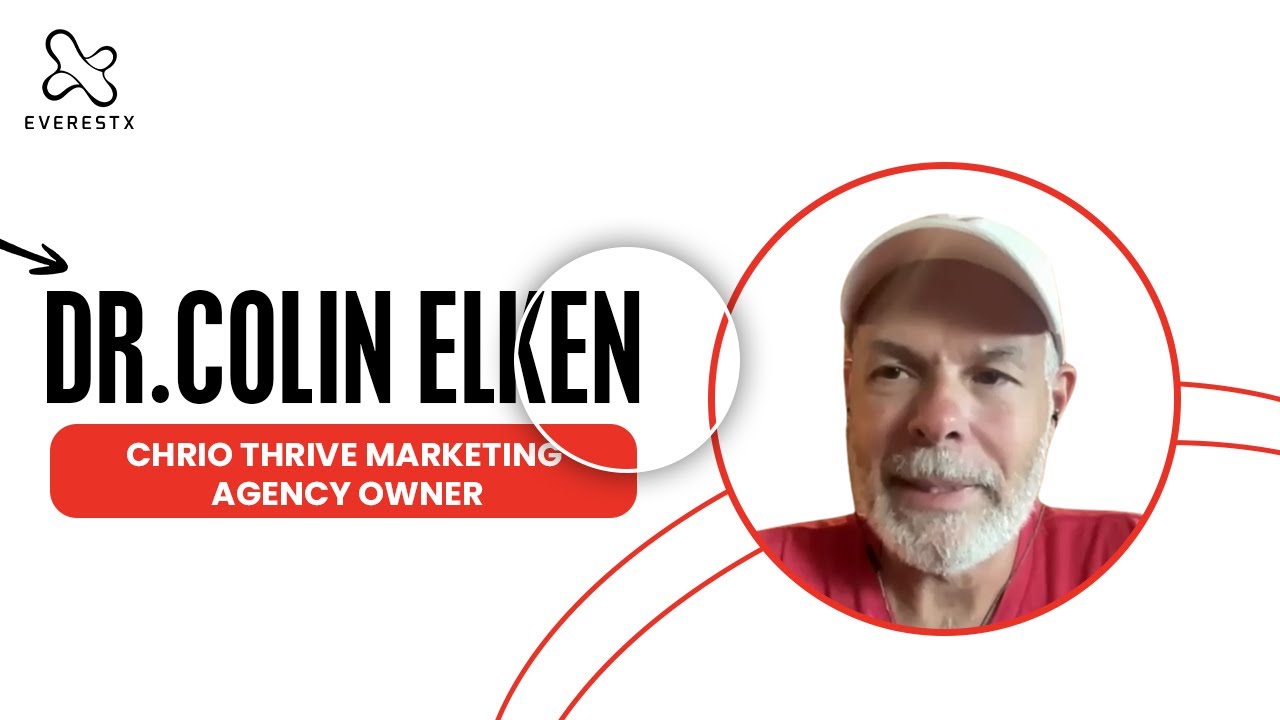
“He really acts as if he’s a part owner of the company. Owns up to mistakes right away, corrects them, and has done some wonderful work for us — frankly, helped us grow.”
Dr. Colin Elken
Agency Owner, Chirothrive Marketing Agency
Hired: Digital Marketing Specialist (Full-Time)
“He was a great team member with us for the last year. Definitely knows digital ads — very responsive and committed throughout.”
Jerry Martinez
President, Sunray Media Consultants
Hired: Performance Marketing Specialist (Full-Time)
“Saved us a ton of time on screening. The person they sent came in ready and picked up our stack fast — has been delivering consistently since week one.”
Rishi Patel
Senior Talent Operations Manager, RippleMatch
Hired: Paid Ads Specialist (Part-Time)
Ready to Hire a Senior Performance Marketing Manager?
Get matched with a vetted Senior Performance Marketing Manager in 48 hours. Try 1 week risk-free — no charge if not the right fit.
48-hour match guaranteed · Replacement at no cost · Cancel anytime