Hire a Go-to-Market Specialist
Launch Products That Win Markets — Not Just Attention
Ninety-five percent of new products fail. Not because the product is bad, but because the go-to-market strategy was missing, incomplete, or built on assumptions instead of data. A go-to-market specialist is the difference between a launch that captures market share and one that burns through budget with nothing to show for it. They bring the strategic framework that connects your product to the right audience, through the right channels, with the right messaging — at the right time.
Also known as
GTM Specialist·GTM Strategist·Product Launch Marketing Specialist·Go-to-Market Consultant
What Does a Go-to-Market Specialist Do?
A go-to-market specialist owns the end-to-end strategy for bringing products, features, or services to market — from initial market validation through post-launch optimization. Their work sits at the intersection of product, marketing, and sales, and requires both strategic thinking and hands-on execution across multiple disciplines.
Market research and opportunity sizing is where every GTM engagement begins
A specialist conducts competitive landscape analysis, identifies total addressable market (TAM), serviceable addressable market (SAM), and serviceable obtainable market (SOM), and maps buyer personas with precision. They don't just describe who your buyer is — they document how buyers discover solutions, what evaluation criteria they use, who else is involved in the decision, and what objections surface at each stage. This research forms the foundation of every downstream decision, from pricing to channel selection.
Competitive positioning and messaging framework development transforms research into actionable strategy. A GTM specialist defines your unique value proposition relative to alternatives — not just direct competitors, but the status quo and DIY approaches buyers might default to. They build messaging hierarchies: a single core positioning statement, 3-5 supporting value pillars, and specific proof points for each persona and buying stage. This messaging framework becomes the single source of truth for sales decks, website copy, ad creative, email sequences, and PR narratives.
Launch planning and execution is the operational core of GTM work
Specialists build detailed launch timelines with cross-functional dependencies mapped across product, engineering, marketing, sales, customer success, and support. They define launch tiers (major launch, minor launch, feature update) with corresponding resource allocation. They coordinate pre-launch activities: beta programs, analyst briefings, influencer seeding, partner enablement, and internal training. On launch day, they orchestrate multi-channel activation and monitor real-time signals to adjust tactics as needed.
Channel strategy determines how your product reaches its buyers
A GTM specialist evaluates direct versus indirect channels, assesses partner and reseller economics, maps content and paid media to each stage of the buyer journey, and builds attribution models to measure channel effectiveness. They understand that channel strategy isn't just about where to advertise — it's about the entire path from awareness to purchase, including sales motions, trial experiences, and onboarding flows.
Sales enablement bridges the gap between marketing strategy and revenue execution. GTM specialists create battle cards, competitive comparison sheets, objection handling guides, ROI calculators, and demo scripts that arm sales teams with the tools to close deals. They train SDRs and AEs on positioning, ideal customer profiles, and qualification criteria. They build the feedback loop between sales conversations and marketing messaging, ensuring that what the market hears aligns with what sales delivers.
Post-launch optimization is where good GTM specialists separate themselves from project managers who treat launch day as the finish line. They track adoption metrics, win/loss rates, pipeline velocity, customer feedback, and competitive response. They run rapid iteration cycles: adjusting messaging based on sales call recordings, refining ICPs based on closed-won analysis, optimizing channel mix based on CAC by source, and updating pricing or packaging based on early market feedback. The first 90 days after launch are where the real GTM work happens.
Core Go-to-Market Specialist Skills
Market Research & Competitive Analysis
CoreConducting systematic market sizing (TAM/SAM/SOM), competitive landscape mapping, buyer persona development, and opportunity assessment. Translating research findings into actionable strategic recommendations that inform positioning, pricing, and channel decisions.
Product Positioning & Messaging
CoreDeveloping differentiated positioning frameworks, value propositions, and messaging hierarchies that resonate with target buyers. Creating the strategic narrative that aligns all customer-facing communications — from website copy to sales decks to investor pitches.
Launch Planning & Execution
CoreBuilding and managing cross-functional launch plans with defined milestones, resource allocation, dependency mapping, and risk mitigation. Coordinating product, marketing, sales, and customer success teams through pre-launch, launch day, and post-launch phases.
Channel Strategy & Distribution
CoreEvaluating and selecting the right mix of direct and indirect channels to reach target buyers efficiently. Includes partner and reseller strategy, content distribution planning, paid media channel selection, and attribution modeling to measure channel ROI.
Sales Enablement
CoreCreating battle cards, competitive comparison sheets, objection handling guides, ROI calculators, demo scripts, and training materials that arm sales teams to close deals. Building the feedback loop between sales conversations and marketing strategy.
Post-Launch Analytics & Optimization
CoreTracking adoption metrics, pipeline velocity, win/loss rates, CAC by channel, and customer feedback post-launch. Running rapid iteration cycles to adjust messaging, refine ICPs, optimize channel mix, and update positioning based on real market signals.
Advanced Go-to-Market Specialist Skills
Product-Led Growth Strategy
AdvancedDesigning self-serve acquisition and activation funnels where the product itself drives user acquisition, expansion, and retention. Building freemium-to-paid conversion strategies, in-app onboarding flows, and viral/referral mechanics that reduce reliance on sales-led motions.
International Market Entry
AdvancedAdapting GTM strategies for new geographies — accounting for cultural buying behavior differences, regulatory constraints, local competitive landscapes, pricing localization, and channel partner ecosystems. Building market entry playbooks that go beyond translation.
Pricing & Packaging Strategy
AdvancedDesigning pricing architectures (tiered, usage-based, per-seat, hybrid) aligned to buyer value perception and competitive positioning. Conducting willingness-to-pay research, building pricing experiments, and optimizing packaging to maximize both adoption and revenue.
Account-Based Go-to-Market
AdvancedBuilding GTM strategies for enterprise deals that target specific high-value accounts with personalized outreach, custom content, and multi-threaded engagement across the buying committee. Coordinating ABM campaigns across marketing, sales, and customer success.
Category Creation
AdvancedEstablishing and evangelizing entirely new product categories when no existing market definition fits. Includes analyst relations, thought leadership content strategy, market education campaigns, and the long-game narrative building required to make buyers understand a problem they didn't know they had.
M&A and Portfolio GTM Integration
AdvancedManaging go-to-market strategy for acquired products — rationalizing overlapping offerings, cross-selling into existing customer bases, repositioning acquired products within the parent brand architecture, and migrating customers without churn.
Go-to-Market Specialist Tools & Platforms
HubSpot
PrimaryCRM and marketing automation platform for managing buyer journey tracking, lead scoring, email nurture sequences, pipeline reporting, and sales enablement content distribution. The most common GTM operating system for mid-market B2B companies.
Salesforce
PrimaryEnterprise CRM for tracking pipeline creation, win/loss analysis, competitive intelligence, forecast accuracy, and sales activity metrics that inform GTM strategy. Essential for enterprise and late-stage SaaS GTM motions.
Google Analytics 4
PrimaryWeb and product analytics platform for measuring channel performance, user acquisition funnels, landing page conversion rates, and campaign attribution — critical for tracking the digital components of any GTM strategy.
Notion / Confluence
PrimaryKnowledge management platforms for building and distributing GTM playbooks, launch plans, competitive intelligence libraries, messaging frameworks, and cross-functional collaboration documents that keep all teams aligned.
Tableau / Looker
PrimaryBusiness intelligence and data visualization tools for building GTM dashboards that track launch KPIs, pipeline metrics, channel ROI, competitive win rates, and market penetration progress across segments.
Gong / Chorus
OptionalConversation intelligence platforms that record and analyze sales calls, surfacing buyer objections, competitive mentions, and messaging effectiveness data that inform GTM strategy adjustments in real time.
Klue / Crayon
OptionalCompetitive intelligence platforms that automate tracking of competitor product changes, pricing updates, messaging shifts, and market movements — feeding insights into battle cards and positioning updates.
Mixpanel / Amplitude
OptionalProduct analytics platforms for tracking user activation, feature adoption, and retention metrics in product-led GTM motions. Essential for understanding which product experiences drive conversion and expansion.
Asana / Monday.com
OptionalProject management platforms for coordinating cross-functional launch timelines, tracking deliverable status across teams, and managing the operational complexity of multi-workstream GTM programs.
SEMrush / Ahrefs
OptionalSEO and competitive research tools for analyzing competitor content strategies, identifying keyword opportunities for new market categories, and building organic search-driven GTM motions that compound over time.
Who Needs a Go-to-Market Specialist?
Startups launching their first product are the most obvious — and often the most underserved — market for GTM specialists. Founding teams typically have deep product expertise but limited experience in market positioning, channel economics, and sales process design. They build something they believe in and assume the market will find it. A GTM specialist brings the structured approach that transforms a good product into a successful market entry: validated buyer personas, competitive positioning that resonates, a channel strategy that matches budget constraints, and launch metrics that tell you whether you're gaining traction or burning cash.
SaaS companies entering new markets or launching new product lines need GTM expertise that goes beyond their existing playbook. What worked for your initial product in your home market won't necessarily work for an adjacent product or a new geography. GTM specialists bring cross-market experience — they've seen what works in enterprise versus mid-market versus SMB motions, they understand the differences between product-led and sales-led growth, and they know how to adapt messaging and channel strategy for different buyer segments without starting from scratch.
Established companies launching new product lines face a unique GTM challenge: they have brand recognition and existing customer relationships, but their existing go-to-market infrastructure may not fit the new product's target buyer. A GTM specialist helps these companies avoid the trap of forcing a new product through old channels. They identify where the new product's ideal customer profile overlaps with — and diverges from — the existing customer base, and build a launch strategy that leverages existing assets without being constrained by them.
Private equity and venture-backed companies under pressure to accelerate growth hire GTM specialists to bring discipline to their market expansion. Investors expect a systematic approach to new market entry, not ad-hoc experimentation. GTM specialists build the launch playbooks, define the KPIs, and establish the reporting cadences that give leadership and investors visibility into market traction. They've often worked across multiple portfolio companies and bring pattern recognition that accelerates time-to-revenue.
Companies expanding internationally need GTM specialists who understand that entering a new geography is essentially launching a new product. Cultural differences in buying behavior, regulatory constraints, local competitive landscapes, channel partner ecosystems, and pricing expectations all require adaptation. A GTM specialist with international experience builds market entry strategies that account for these variables rather than assuming a copy-paste approach will work.
Companies in competitive markets facing disruption or new entrants also benefit from GTM expertise. When a new competitor enters your market or existing competitors shift their positioning, a GTM specialist helps you respond strategically — repositioning your value proposition, updating competitive battle cards, and adjusting channel strategy to defend market share while capitalizing on new opportunities the disruption creates.
How to Evaluate a Go-to-Market Specialist
Start with a positioning exercise. Give the candidate a real or realistic product scenario — say, a B2B SaaS tool entering a market with three established competitors — and ask them to develop a positioning framework on the spot. Strong candidates immediately ask about buyer personas, current alternatives, and what the product does differently. They build a positioning statement that defines the target buyer, the problem, the unique approach, and the measurable outcome. Weak candidates jump straight to tactics (channels, campaigns) without establishing the strategic foundation.
Test their market research methodology. Ask: "How would you size the market opportunity for a new product in a category where no direct competitor exists?" Strong answers cover bottom-up TAM estimation using buyer persona counts and willingness-to-pay data, top-down validation using adjacent market sizing, and a realistic SOM calculation that accounts for sales capacity and competitive dynamics. Look for candidates who distinguish between the theoretical market and the market they can actually capture with available resources.
Evaluate their cross-functional leadership ability. GTM specialists must coordinate across product, engineering, sales, marketing, customer success, and sometimes legal and finance. Ask for a specific example of a launch where cross-functional alignment broke down and how they resolved it. Strong candidates describe establishing shared KPIs, running structured launch reviews, and creating RACI matrices that clarified ownership. They talk about the human dynamics of alignment, not just the project management mechanics.
Probe their sales enablement depth. Ask them to walk you through the sales enablement materials they've built for a recent launch. Look for specifics: competitive battle cards with objection handling for the top 3 competitors, ROI calculators built on actual customer data, demo scripts tailored to different personas, and onboarding playbooks for new sales reps. Candidates who treat sales enablement as an afterthought — or who've never built these materials themselves — will struggle to bridge the gap between strategy and revenue.
Ask about failure. Every experienced GTM specialist has launched products that missed targets. Ask: "Tell me about a launch that didn't go as planned. What happened, what did you learn, and what would you do differently?" Strong candidates describe specific post-mortems, identify root causes (wrong ICP, overestimated channel capacity, pricing misaligned to value), and articulate concrete changes they made to subsequent launches. Candidates who blame external factors or claim they've never had a failed launch are either inexperienced or dishonest.
Finally, assess their metrics fluency. Ask what KPIs they track during the first 30, 60, and 90 days post-launch. Strong answers include pipeline created, win rate by segment, time-to-first-deal, CAC by channel, activation rate (for product-led), sales cycle length versus forecast, and competitive win/loss ratios. They should articulate not just what they measure, but what actions each metric triggers — what's the threshold for adjusting messaging, reallocating channel budget, or revisiting the ICP?
Mistakes to Avoid When Hiring a Go-to-Market Specialist
Pattern failures we see across hundreds of go-to-market specialist engagements — and what to do instead.
Hiring on credentials instead of results
Certifications, agency names on a résumé, and tool fluency say nothing about whether a Go-to-Market Specialist can move a metric. Ask for specific accounts, the starting state, the ending state, and the specialist's exact contribution. If they can't quantify outcomes, they likely didn't drive them.
Skipping the industry-experience question
Go-to-Market Specialists who have worked in your industry compress the ramp from 90 days to 14. The patterns — buyer behavior, seasonality, channel mix, what creative wins — don't transfer across verticals as much as people assume. Always ask for at least one account in or adjacent to your industry.
Vague or absent success metrics
Hiring without defined success criteria is how 6-month engagements end with "we tried a bunch of stuff." Before signing, agree on 2-3 quantitative outcomes tied to your business (CPA at X, revenue lift of Y%, organic traffic to Z), the time window, and what failure looks like. Specialists who push back on this are signaling they don't want accountability.
Underweighting communication and async work habits
Even the best Go-to-Market Specialist fails if you can't reach them, get a status update, or read their thinking. Especially for remote engagements, test their async habits explicitly: how do they document work, how often do they update, how do they handle escalation when something breaks. Bad communicators don't get better under pressure.
Over-paying for senior talent on early-stage work, or under-paying for strategic work
Both extremes waste money. A senior Go-to-Market Specialist at $150/hr is a poor fit for tactical execution; a $25/hr generalist is a poor fit for setting up tracking, building attribution, or running diagnostics. Match the seniority of the hire to the actual problem — for most growing businesses, the sweet spot is a vetted mid-level specialist at managed-platform rates ($10–$16/hr through EverestX), not the cheapest or most senior option.
No replacement plan if the hire is the wrong fit
~25–30% of first-attempt marketing hires don't work out within 90 days. If your hiring process has no built-in path to replace without re-starting from scratch (re-recruiting, re-interviewing, re-onboarding), the cost of getting it wrong is 6-8 weeks of stalled execution. Build replacement into the engagement up-front, or hire through a platform that includes it by default.
Pricing Comparison
No upfront fees · no hiring fees · no platform fees — clients pay only for hours worked.
Full-time
$10–$12/hr
Mon–Fri, 8 hrs/day · 40 hrs/week
≈ $1,700–$2,100/mo
Part-time
$14–$16/hr
Mon–Fri, 4 hrs/day · 20 hrs/week
≈ $1,200–$1,400/mo
How that compares to freelancers and agencies
| Experience Level | Freelancer | Agency | EverestX |
|---|---|---|---|
Junior Go-to-Market Specialist | $60–90/hr $4,000–$7,000/mo | $120–175/hr $8,000–$12,000/mo | $10–$12/hr $1,700–$2,100/mo |
Mid-Level Go-to-Market Specialist | $90–140/hr $7,000–$12,000/mo | $175–250/hr $12,000–$18,000/mo | $10–$12/hr $1,700–$2,100/mo |
Senior Go-to-Market Specialist | $140–200/hr $12,000–$18,000/mo | $250–350/hr $18,000–$28,000/mo | $10–$12/hr $1,700–$2,100/mo |
Expert GTM Strategist / Fractional VP | $200–250/hr $18,000–$25,000/mo | $350–500/hr $25,000–$40,000/mo | $10–$12/hr $1,700–$2,100/mo |
EverestX rate is flat across experience levels — within the band, exact rate depends on the specific talent's background and skills. Part-time engagements available at $14–$16/hr (20 hrs/week).
Common Go-to-Market Specialist Challenges We Solve
Stop struggling with these pain points. Our vetted specialists deliver solutions from day one.
Problem
Product Launches That Fall Flat
Your team spent months building a great product, launched it with a blog post and a press release, and watched as pipeline failed to materialize. Without a structured GTM plan, launches become announcements rather than revenue events — generating awareness without conversion.
Solution
A GTM specialist builds a pre-launch, launch, and post-launch playbook that coordinates messaging, channel activation, sales enablement, and demand generation into a unified plan. They define launch tiers, set realistic pipeline targets, and create the feedback mechanisms that let you adjust tactics in real time rather than waiting 90 days to realize something isn't working.
Problem
Misaligned Sales and Marketing
Marketing generates leads that sales says are unqualified. Sales creates its own messaging that contradicts the website. Neither team agrees on the ideal customer profile. This misalignment is the single biggest GTM failure mode — and it compounds with every launch.
Solution
A GTM specialist creates the shared strategic framework that aligns both teams: a validated ICP definition, a messaging hierarchy that both teams use, lead scoring criteria built on actual close data, and a feedback loop where sales insights directly inform marketing strategy. They facilitate the cross-functional alignment that most companies know they need but can't achieve internally.
Problem
Entering New Markets Without a Playbook
Your product has traction in one segment, and leadership wants to expand into a new vertical or geography. But the team is applying the same positioning, channels, and sales motion that worked in the original market — and wondering why conversion rates are half what they expected.
Solution
A GTM specialist conducts market-specific research, adapts positioning and messaging for the new buyer persona, identifies the right channels for the target segment, and builds a tailored launch playbook that accounts for the differences between your existing market and the new one. They bring pattern recognition from past market expansions that prevents your team from repeating common mistakes.
Problem
No Competitive Differentiation
Your website sounds like every competitor's website. Your sales team can't articulate why a prospect should choose you over alternatives. Feature comparisons turn into pricing negotiations because buyers see no meaningful difference between options.
Solution
A GTM specialist conducts rigorous competitive analysis and builds a positioning framework that identifies your unique strengths relative to each competitor. They create battle cards that give sales teams specific, credible responses to competitive objections. They develop messaging that emphasizes the outcomes and experiences that differentiate you — not just the features that every vendor claims.
Problem
Slow Time-to-Revenue on New Products
New products take 12-18 months to reach meaningful revenue, burning through budget and leadership patience. The team is iterating on the product when the real problem is that the GTM strategy — positioning, ICP targeting, channel selection, sales process — hasn't been validated.
Solution
A GTM specialist compresses time-to-revenue by front-loading the strategic work: validating product-market fit signals before full launch, running targeted pilots to test messaging and channels, building rapid feedback loops between early customers and the product team, and creating a sales process that converts early adopters into referenceable accounts that accelerate the next wave of deals.
Problem
Scaling Beyond Founder-Led Sales
The founders closed the first 20 customers through their network and personal relationships. Now the company needs to scale to 200 customers, but the sales team can't replicate the founder's intuition, relationships, or product knowledge. Revenue growth stalls.
Solution
A GTM specialist codifies the founder's implicit knowledge into a repeatable sales playbook: documented ICP criteria, a messaging framework that captures the founder's key arguments, a structured discovery and demo process, and enablement materials that let new sales reps ramp to productivity in weeks rather than months. They build the GTM infrastructure that makes growth a system, not a personality.
Go-to-Market Specialist vs Agency: Quick Comparison
Should you hire a dedicated Go-to-Market Specialist or outsource to an agency? Here is how the two approaches compare across the dimensions that matter most. For a deeper analysis, read our full Go-to-Market Specialist vs agency comparison.
Detailed Comparison
See how EverestX stacks up against hiring a freelancer or working with an agency.
| Dimension | Freelancer | Agency | EverestX |
|---|---|---|---|
Monthly Cost | $7,000–$18,000/mo | $15,000–$40,000/mo | $1,700–$2,100/mo full-time · $1,200–$1,400/mo part-time |
Hourly Rate | $90–$200/hr (freelancer) | $250–$500/hr (blended) | $10–$12/hr full-time · $14–$16/hr part-time (vetted) |
Strategic Depth | High — full GTM ownership | Varies — often surface-level | High — pre-vetted strategists |
Execution Involvement | Strategy + hands-on execution | Strategy only (deck delivery) | Strategy + hands-on execution |
Cross-Functional Coordination | Yes — product, sales, marketing | Limited — marketing focus only | Yes — embedded with your teams |
Sales Enablement | Included in engagement | Often separate or absent | Included in engagement |
Speed to Impact | Fast (2-4 weeks to strategy) | Slow (6-8 weeks to deliverable) | Fast (2-4 weeks to strategy) |
Post-Launch Optimization | Included — adjusts in real time | Separate engagement / SOW | Included — continuous optimization |
How EverestX Works
A streamlined process to get you from requirement to results in days, not months.
Tell Us What You Need
Submit your role requirements, budget, and timeline. Our team reviews every request to understand your exact needs.
Get Matched in 48 Hours
We match you with pre-vetted specialists from our talent pool. Review profiles, skills, and availability before deciding.
Start Working Together
Your specialist is onboarded with managed support. We handle contracts, payments, and ongoing quality assurance.
Go-to-Market Specialist Hiring FAQs
What does a go-to-market specialist actually do?
A go-to-market specialist owns the strategy and execution of bringing products, features, or services to market. Their work spans market research and competitive analysis, buyer persona development, product positioning and messaging, channel strategy, launch planning, sales enablement, and post-launch optimization. They sit at the intersection of product, marketing, and sales — ensuring all three functions are aligned on who the buyer is, what the messaging says, and how the product reaches the market. Think of them as the strategic architect of your launch, not just a project manager with a timeline.
When should I hire a go-to-market specialist versus handling GTM internally?
Hire a GTM specialist when you're launching a product into a new market, entering a competitive category, expanding to a new geography, or scaling beyond founder-led sales. Internal teams can handle GTM for incremental feature launches or minor product updates, but new market entries require dedicated strategic focus. The cost of a failed launch — 6-12 months of lost revenue, wasted sales hiring, and damaged market positioning — far exceeds the cost of a specialist who increases your probability of success by 2-3x.
How is a GTM specialist different from a product marketing manager?
Product marketing managers focus primarily on messaging, positioning, and content for existing products within established markets. A GTM specialist has a broader scope: they own the entire market entry strategy including channel selection, sales process design, pricing strategy, partnership development, and cross-functional launch coordination. In practice, a strong GTM specialist does everything a PMM does plus the strategic and operational work of orchestrating the launch across the entire organization. For new product launches and market entries, you need the broader GTM skill set.
How long does a typical go-to-market engagement last?
A full GTM engagement typically spans 4-6 months: 4-6 weeks for research and strategy development, 4-6 weeks for pre-launch preparation and enablement, and 8-12 weeks of active launch management and optimization. Some companies engage GTM specialists on an ongoing basis for continuous market expansion — launching into new verticals, geographies, or buyer segments on a rolling basis. The minimum viable engagement is usually 3 months; anything shorter doesn't allow enough time to complete the research, build the strategy, and measure results.
What results should I expect from hiring a GTM specialist?
Within the first 90 days, expect a validated positioning framework, a documented launch playbook, competitive battle cards, and initial pipeline from early activation channels. By month 4-6, you should see measurable pipeline created against targets, initial win/loss data informing strategy refinements, and sales ramp time decreasing as enablement materials take effect. Top GTM specialists compress time-to-first-deal by 30-50% compared to unstructured launches and improve first-year revenue attainment by 40-80% through better targeting, positioning, and channel selection.
Can a GTM specialist work alongside my existing marketing team?
Absolutely — that's the most common engagement model. A GTM specialist typically works with your existing marketing team, product team, and sales leadership rather than replacing any of them. They bring the strategic framework and cross-functional coordination that internal teams often lack the bandwidth or experience to develop. Your content team executes on the messaging framework the GTM specialist creates. Your demand gen team runs the channels the GTM specialist identifies. Your sales team uses the enablement materials the GTM specialist builds. The specialist is the strategic architect; your team handles ongoing execution.
More Ways to Get Go-to-Market Specialist Help
Different intents, different pages — same vetted talent network underneath.
Buy it as a service
Go-to-Market Specialist as a Managed Service
If you'd rather buy a service outcome than hire a person, see our go-to-market specialist done-for-you service page.
Learn moreCompare alternatives
Best Go-to-Market Specialist Agencies & Alternatives (2026)
Honest comparison of the top go-to-market specialist vendors — EverestX vs Toptal vs Upwork vs agencies.
Learn moreCost & Pricing
Top Cities
- Go-to-Market Specialist in New York
- Go-to-Market Specialist in Los Angeles
- Go-to-Market Specialist in Chicago
- Go-to-Market Specialist in Houston
- Go-to-Market Specialist in Austin
- Go-to-Market Specialist in San Francisco
- Go-to-Market Specialist in Seattle
- Go-to-Market Specialist in Denver
- Go-to-Market Specialist in Boston
- Go-to-Market Specialist in Miami
Industries
- Go-to-Market Specialist for E-commerce & DTC
- Go-to-Market Specialist for SaaS & Technology
- Go-to-Market Specialist for Healthcare & Medical
- Go-to-Market Specialist for Finance & Fintech
- Go-to-Market Specialist for Education & EdTech
- Go-to-Market Specialist for Real Estate
- Go-to-Market Specialist for Travel & Hospitality
- Go-to-Market Specialist for Agency & Consulting
- Go-to-Market Specialist for B2B Services
- Go-to-Market Specialist for Consumer Products & CPG
- Go-to-Market Specialist for Media & Entertainment
- Go-to-Market Specialist for Nonprofit & NGO
Related Roles
Real clients, real outcomes
Hear it from teams
we work with.
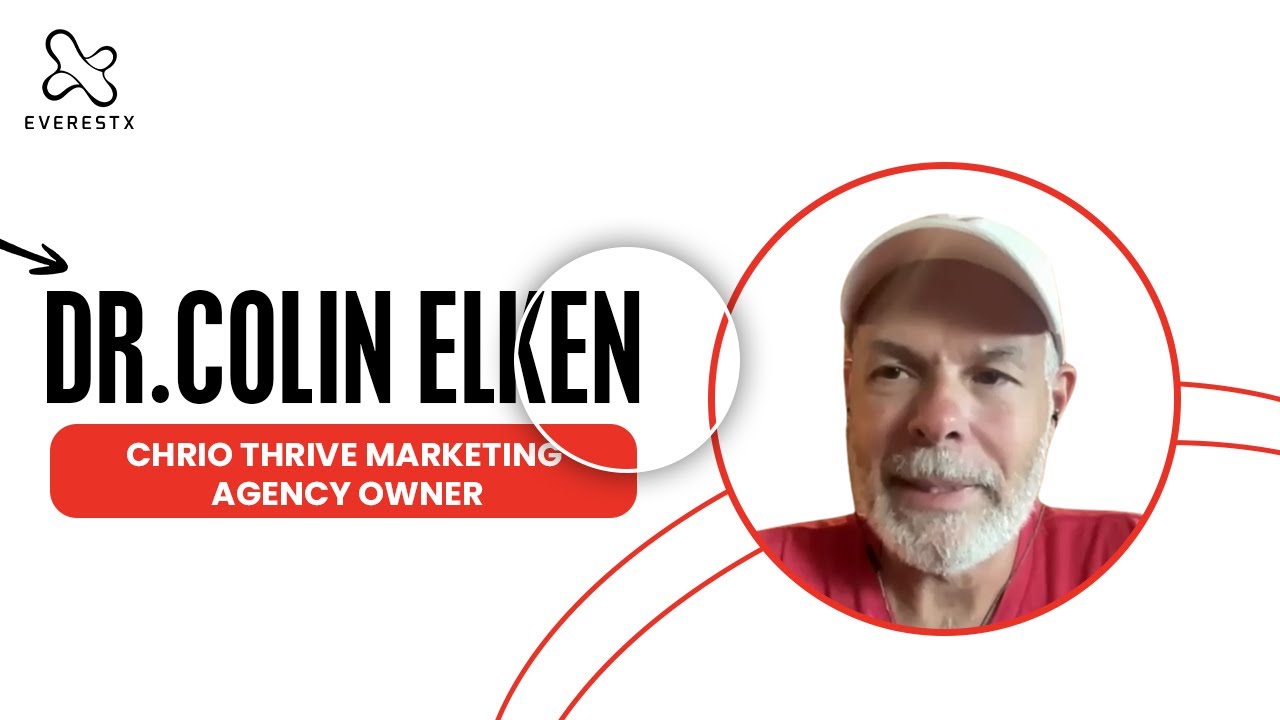
“He really acts as if he’s a part owner of the company. Owns up to mistakes right away, corrects them, and has done some wonderful work for us — frankly, helped us grow.”
Dr. Colin Elken
Agency Owner, Chirothrive Marketing Agency
Hired: Digital Marketing Specialist (Full-Time)
“He was a great team member with us for the last year. Definitely knows digital ads — very responsive and committed throughout.”
Jerry Martinez
President, Sunray Media Consultants
Hired: Performance Marketing Specialist (Full-Time)
“Saved us a ton of time on screening. The person they sent came in ready and picked up our stack fast — has been delivering consistently since week one.”
Rishi Patel
Senior Talent Operations Manager, RippleMatch
Hired: Paid Ads Specialist (Part-Time)
Ready to Hire a Go-to-Market Specialist?
Get matched with a vetted Go-to-Market Specialist in 48 hours. Try 1 week risk-free — no charge if not the right fit.
48-hour match guaranteed · Replacement at no cost · Cancel anytime