Hire a Growth Marketing Strategist
Unlock Compounding Revenue Growth With a Dedicated Growth Marketing Strategist
Growth marketing is no longer a buzzword — it's the discipline that separates companies that scale from companies that stall. According to LinkedIn's 2024 Jobs on the Rise report, growth marketing roles have grown 45% year-over-year, making it one of the fastest-growing specializations in digital marketing. The average Growth Marketing Manager in the US earns $128,000 per year, with senior roles reaching $175,000 — a reflection of the outsized impact these professionals have on revenue trajectories.
Also known as
Growth Hacker·Growth Marketing Manager·Growth Marketing Consultant·Growth Marketing Specialist
What Does a Growth Marketing Strategist Do?
A growth marketing strategist owns the strategy, experimentation, and optimization of your entire customer acquisition and retention engine. Their work spans every stage of the funnel and every channel that touches it — but always with a systems-level perspective that connects individual tactics to compounding business outcomes.
Experimentation framework design is the foundation of everything a growth strategist does. They build structured testing programs — typically using ICE (Impact, Confidence, Ease) or RICE (Reach, Impact, Confidence, Effort) scoring — to prioritize which experiments to run each sprint. They define hypotheses, design test parameters, determine statistical significance thresholds, and document learnings in a shared experiment repository. A mature growth program runs 10-20 experiments per month across channels, landing pages, messaging, pricing, and onboarding flows. The strategist ensures each test has a clear hypothesis, measurable outcome, and decision framework.
Channel strategy and acquisition optimization is where growth strategists spend significant time. They evaluate and prioritize acquisition channels — paid social, paid search, SEO, content marketing, partnerships, referral programs, cold outreach — based on unit economics, scalability, and stage of company growth. They don't just launch campaigns; they build channel models that predict CAC, LTV, and payback period by channel, then allocate budget to maximize growth velocity within target unit economics.
Funnel optimization and conversion rate improvement is the highest-ROI work a growth strategist performs. They map every step of the customer journey — from first touch through purchase and beyond — identify drop-off points, and design experiments to improve conversion at each stage. This includes landing page optimization, signup flow simplification, onboarding sequence design, pricing page testing, and checkout friction reduction. A 10% improvement at three stages of a five-stage funnel compounds to a 33% total conversion lift.
Data analysis and growth modeling separates a strategist from a tactician
Growth marketers build cohort analyses, retention curves, LTV models, and channel attribution frameworks that inform strategic decisions. They identify leading indicators of churn, calculate payback periods by acquisition source, and build financial models that connect marketing spend to revenue outcomes. They're as comfortable in a spreadsheet or SQL query as they are in an ad platform.
Growth loops and flywheel design is the advanced work that creates sustainable, compounding growth. A growth strategist identifies and builds self-reinforcing systems: referral programs where happy customers acquire new customers, content flywheels where SEO traffic generates leads that create case studies that generate more SEO traffic, or product-led growth loops where user activity creates value that attracts more users. These loops reduce dependence on paid acquisition over time and create durable competitive advantages.
Retention and expansion revenue optimization is where growth strategists differentiate from acquisition-focused marketers. They build onboarding sequences that drive activation, identify churn risk signals and design intervention campaigns, create upsell and cross-sell motions, and implement loyalty programs. For subscription and SaaS businesses, retention improvements often have 3-5x the revenue impact of equivalent acquisition improvements because they compound across the entire customer base.
Core Growth Marketing Strategist Skills
Growth Experimentation & A/B Testing
CoreDesigning, prioritizing, and executing structured growth experiments using ICE/RICE frameworks. Includes hypothesis formation, statistical significance calculation, multivariate testing, and maintaining experiment repositories that build institutional knowledge over time.
Funnel Optimization & CRO
CoreMapping full customer journeys from first touch through conversion and retention, identifying drop-off points, and designing experiments to improve conversion rates at each stage — landing pages, signup flows, onboarding, pricing pages, and checkout processes.
Channel Strategy & Acquisition
CoreEvaluating, prioritizing, and optimizing acquisition channels based on CAC, LTV, payback period, and scalability. Includes paid media, organic search, content marketing, partnerships, referral programs, and product-led acquisition motions.
Data Analysis & Growth Modeling
CoreBuilding cohort analyses, retention curves, LTV models, and channel attribution frameworks. Translating raw data into actionable growth insights using SQL, spreadsheets, and analytics platforms to inform strategic resource allocation.
Retention & Lifecycle Marketing
CoreDesigning onboarding sequences, activation campaigns, churn intervention programs, and expansion revenue motions. Understanding behavioral signals that predict retention or churn and building automated systems to act on them.
Growth Loop & Flywheel Design
CoreIdentifying and building self-reinforcing growth systems — referral loops, content flywheels, product-led growth mechanics, and viral coefficients — that reduce dependence on paid acquisition and create compounding, durable growth.
Advanced Growth Marketing Strategist Skills
Product-Led Growth (PLG)
AdvancedDesigning growth mechanics built into the product itself — freemium models, viral sharing features, network effects, and in-product referral loops. Requires close collaboration with product teams to embed growth into the user experience rather than bolting it on externally.
Revenue Operations & Unit Economics
AdvancedBuilding financial models that connect marketing activity to revenue outcomes — LTV/CAC ratios by channel, payback period analysis, contribution margin modeling, and scenario planning that helps leadership make confident investment decisions.
Multi-Touch Attribution Modeling
AdvancedImplementing and managing attribution frameworks beyond last-click — including data-driven attribution, marketing mix modeling, and incrementality testing — to accurately measure the true impact of each channel and campaign on revenue.
Pricing & Packaging Optimization
AdvancedRunning pricing experiments, analyzing willingness-to-pay data, designing tiered packaging structures, and testing monetization strategies that maximize revenue per customer without increasing churn. Includes Van Westendorp analysis and conjoint studies.
International & Market Expansion
AdvancedAdapting growth strategies for new geographic markets — localization of messaging, channel mix adjustment for regional preferences, pricing localization, and building market-entry playbooks that reduce time-to-revenue in new markets.
Growth Team Leadership
AdvancedBuilding and managing cross-functional growth squads — defining roles, establishing sprint cadences, creating experiment review processes, and developing junior growth marketers into independent experimenters who multiply the team's output.
Growth Marketing Strategist Tools & Platforms
Google Analytics 4
PrimaryThe foundational web analytics platform for tracking user behavior, conversion funnels, traffic sources, and campaign attribution. Growth strategists use GA4 for funnel analysis, audience building, event tracking, and connecting acquisition data to on-site behavior.
Amplitude
PrimaryProduct analytics platform for behavioral cohort analysis, retention curve modeling, and feature adoption tracking. Essential for growth strategists working on product-led growth, SaaS activation, and understanding which user behaviors predict long-term retention.
Google Ads
PrimarySearch and display advertising platform used for high-intent acquisition experiments, keyword-level CAC analysis, and demand capture. Growth strategists use Google Ads as both an acquisition channel and a research tool for understanding search demand and commercial intent.
Meta Ads Manager
PrimaryPaid social advertising platform for running acquisition experiments across Facebook and Instagram. Growth strategists use Meta for audience testing, creative experimentation, lookalike audience building, and scaling proven acquisition funnels.
HubSpot
PrimaryCRM and marketing automation platform for managing lead nurture sequences, lifecycle stage tracking, lead scoring, and connecting marketing activity to pipeline and revenue. The central nervous system for B2B growth marketing operations.
Mixpanel
OptionalProduct analytics alternative to Amplitude with strong event-based tracking, funnel analysis, and retention reporting. Preferred by some growth teams for its intuitive query builder and real-time data capabilities.
Optimizely
OptionalEnterprise-grade experimentation platform for running A/B tests, multivariate tests, and feature flags across web, mobile, and server-side environments. Provides statistical rigor and experiment management at scale.
Looker / Tableau
OptionalBusiness intelligence platforms for building growth dashboards, visualizing cohort data, and creating executive-level reporting that connects marketing metrics to business outcomes. Essential for data-driven growth teams.
Segment
OptionalCustomer data platform that unifies event data across tools, enabling consistent tracking, audience building, and data routing to analytics, advertising, and marketing automation platforms — the data infrastructure layer for growth teams.
Webflow / Unbounce
OptionalLanding page builders for rapid experimentation on messaging, layout, and conversion optimization without engineering dependencies. Growth strategists use these to launch and iterate on landing pages in hours rather than weeks.
Who Needs a Growth Marketing Strategist?
Startups in the $500K-$10M ARR range are the most natural fit for a growth marketing strategist. At this stage, you've validated product-market fit but haven't yet built a scalable growth engine. Founders are often still doing marketing themselves — running ad campaigns, writing content, tweaking landing pages — but lack the systematic approach needed to scale. A growth strategist brings the experimentation discipline, channel modeling, and funnel optimization that transforms a founder-led marketing effort into a repeatable growth machine. They prioritize ruthlessly, kill underperforming channels quickly, and double down on what's working with data to back every decision.
Scale-ups and Series A/B companies hitting growth plateaus need growth strategists to break through ceilings. The tactics that got you from $0 to $3M ARR rarely work from $3M to $15M. Paid acquisition costs increase, early adopter audiences saturate, and organic growth channels take longer to compound. A growth strategist diagnoses exactly where the bottleneck is — whether it's top-of-funnel acquisition efficiency, middle-of-funnel conversion, or bottom-of-funnel retention — and designs an experimentation program targeted at that specific constraint. Companies that hire growth strategists at this inflection point grow through plateaus 40-60% faster than those that simply increase ad spend.
SaaS and subscription businesses benefit enormously because their revenue model rewards the exact skills a growth strategist brings. Trial-to-paid conversion, feature adoption, net revenue retention, and expansion revenue are all growth marketing problems. A strategist who understands product-led growth mechanics can design onboarding flows that drive activation, identify expansion triggers, and build retention systems that reduce churn by measurable percentage points. For a SaaS company with $5M ARR and 5% monthly churn, reducing churn by 1 percentage point adds $600K in preserved annual revenue — well beyond the cost of a strategist.
Ecommerce brands — particularly DTC brands spending $50K+ per month on paid acquisition — need growth strategists to improve unit economics before scaling further. A growth strategist optimizes the entire post-click experience: landing pages, product pages, checkout flow, post-purchase sequences, and retention campaigns. They build models that connect acquisition cost to customer lifetime value by channel and campaign, ensuring you're scaling profitably rather than buying revenue at a loss.
Companies with fragmented marketing teams often need a growth strategist to serve as the connective tissue between channel specialists. If you have a paid media buyer, an SEO specialist, a content writer, and an email marketer — but no one connecting their efforts into a coherent growth strategy — you're leaving enormous value on the table. A growth strategist provides the strategic layer that turns individual channel execution into a coordinated growth system, ensuring each specialist's work amplifies the others.
Businesses preparing for fundraising or acquisition benefit from having a growth strategist who can articulate and demonstrate a clear, data-backed growth model. Investors and acquirers value companies with predictable, scalable growth engines. A strategist who has built that engine and can present cohort data, LTV/CAC ratios, and growth projections with confidence directly increases company valuation.
How to Evaluate a Growth Marketing Strategist
Start with their experimentation methodology. Ask: "Walk me through how you'd structure a growth experimentation program for a company running zero experiments today." Strong candidates describe a systematic approach — building an experiment backlog, implementing a prioritization framework (ICE or RICE scoring), defining sprint cadences, setting statistical significance requirements, and creating a learning repository. Weak candidates jump straight to tactics ("I'd test Facebook ads versus Google ads") without describing the system that produces consistent, compounding improvement.
Test their analytical depth with a scenario. Give them a real (or realistic) funnel: "We get 50,000 website visitors per month, 2% sign up for a free trial, 15% of trials convert to paid, and average contract value is $200/month. Where would you focus first, and why?" A strong growth strategist calculates the math immediately — 50,000 x 2% x 15% = 150 paid customers/month at $30K MRR — and identifies the highest-leverage improvement point. They'll ask about traffic quality, trial activation rates, and retention before recommending where to focus. They'll also explain why a 50% improvement in trial-to-paid conversion (15% to 22.5%) has more impact than a 50% improvement in traffic volume, because it compounds across all future cohorts.
Ask for channel strategy thinking. A good question: "You have $30,000 per month to acquire customers. How do you decide where to allocate it?" Growth strategists talk about channel-market fit, CAC payback period thresholds, experimentation budgets (typically 10-20% of total spend allocated to testing new channels), and the difference between scalable channels and unscalable-but-high-ROI channels. They reference specific frameworks for channel evaluation and can explain why the right channel mix changes as a company scales.
Probe their retention and LTV thinking. Growth strategists who focus only on acquisition are incomplete. Ask: "What's your approach to improving retention for a product with 8% monthly churn?" Strong candidates discuss cohort analysis to identify which user segments churn fastest, behavioral indicators that predict churn 30-60 days in advance, intervention campaign design, and the distinction between voluntary churn (cancellation) and involuntary churn (failed payments). They should reference specific retention improvement tactics they've implemented and the measurable results.
Request a portfolio of experiments. Ask for 3-5 experiments they've designed, run, and learned from — including failures. Growth strategists who can articulate what they learned from experiments that didn't work demonstrate intellectual honesty and the iterative mindset that drives long-term growth. Look for specificity: hypothesis, test design, sample size, result, and the decision that followed. Candidates who only talk about wins are either cherry-picking or haven't run enough experiments to accumulate meaningful learnings.
Differentiate strategists from tacticians. A growth marketing strategist should be able to zoom out to business model economics and zoom in to individual experiment design. If a candidate can only talk about ad platforms, they're a paid media specialist. If they can only talk about frameworks, they're a consultant without execution experience. The best growth strategists toggle fluently between strategic modeling and hands-on execution — they can build a financial model and also write ad copy for a landing page test.
Mistakes to Avoid When Hiring a Growth Marketing Strategist
Pattern failures we see across hundreds of growth marketing strategist engagements — and what to do instead.
Hiring on credentials instead of results
Certifications, agency names on a résumé, and tool fluency say nothing about whether a Growth Marketing Strategist can move a metric. Ask for specific accounts, the starting state, the ending state, and the specialist's exact contribution. If they can't quantify outcomes, they likely didn't drive them.
Skipping the industry-experience question
Growth Marketing Strategists who have worked in your industry compress the ramp from 90 days to 14. The patterns — buyer behavior, seasonality, channel mix, what creative wins — don't transfer across verticals as much as people assume. Always ask for at least one account in or adjacent to your industry.
Vague or absent success metrics
Hiring without defined success criteria is how 6-month engagements end with "we tried a bunch of stuff." Before signing, agree on 2-3 quantitative outcomes tied to your business (CPA at X, revenue lift of Y%, organic traffic to Z), the time window, and what failure looks like. Specialists who push back on this are signaling they don't want accountability.
Underweighting communication and async work habits
Even the best Growth Marketing Strategist fails if you can't reach them, get a status update, or read their thinking. Especially for remote engagements, test their async habits explicitly: how do they document work, how often do they update, how do they handle escalation when something breaks. Bad communicators don't get better under pressure.
Over-paying for senior talent on early-stage work, or under-paying for strategic work
Both extremes waste money. A senior Growth Marketing Strategist at $150/hr is a poor fit for tactical execution; a $25/hr generalist is a poor fit for setting up tracking, building attribution, or running diagnostics. Match the seniority of the hire to the actual problem — for most growing businesses, the sweet spot is a vetted mid-level specialist at managed-platform rates ($10–$16/hr through EverestX), not the cheapest or most senior option.
No replacement plan if the hire is the wrong fit
~25–30% of first-attempt marketing hires don't work out within 90 days. If your hiring process has no built-in path to replace without re-starting from scratch (re-recruiting, re-interviewing, re-onboarding), the cost of getting it wrong is 6-8 weeks of stalled execution. Build replacement into the engagement up-front, or hire through a platform that includes it by default.
Pricing Comparison
No upfront fees · no hiring fees · no platform fees — clients pay only for hours worked.
Full-time
$10–$12/hr
Mon–Fri, 8 hrs/day · 40 hrs/week
≈ $1,700–$2,100/mo
Part-time
$14–$16/hr
Mon–Fri, 4 hrs/day · 20 hrs/week
≈ $1,200–$1,400/mo
How that compares to freelancers and agencies
| Experience Level | Freelancer | Agency | EverestX |
|---|---|---|---|
Junior Growth Marketing Specialist | $50–75/hr $4,000–$6,000/mo | $100–150/hr $8,000–$12,000/mo | $10–$12/hr $1,700–$2,100/mo |
Mid-Level Growth Marketing Strategist | $75–120/hr $6,000–$10,000/mo | $150–220/hr $10,000–$15,000/mo | $10–$12/hr $1,700–$2,100/mo |
Senior Growth Marketing Strategist | $120–175/hr $10,000–$15,000/mo | $200–300/hr $15,000–$20,000/mo | $10–$12/hr $1,700–$2,100/mo |
Expert / VP of Growth | $175–250/hr $15,000–$25,000/mo | $275–400/hr $20,000–$35,000/mo | $10–$12/hr $1,700–$2,100/mo |
EverestX rate is flat across experience levels — within the band, exact rate depends on the specific talent's background and skills. Part-time engagements available at $14–$16/hr (20 hrs/week).
Common Growth Marketing Strategist Challenges We Solve
Stop struggling with these pain points. Our vetted specialists deliver solutions from day one.
Problem
Growth Has Plateaued Despite Increasing Ad Spend
You're spending more on paid acquisition every quarter but revenue growth has flatlined. CPAs are climbing, ROAS is declining, and the channels that once drove growth are hitting diminishing returns. Throwing more budget at the same channels isn't working, but you don't know where else to invest.
Solution
A growth marketing strategist diagnoses the real bottleneck — which is rarely "not enough ad spend." They audit your full funnel to identify where the biggest conversion gaps exist, diversify your channel mix to reduce dependence on any single platform, and build an experimentation program that systematically discovers new growth levers. Most plateau-stage companies have 2-3x more growth potential in mid-funnel and bottom-funnel optimization than in additional top-of-funnel spend.
Problem
No Systematic Experimentation Process
Your marketing team runs campaigns but doesn't run experiments. There's no hypothesis-driven testing, no structured prioritization of what to test next, and no documentation of what's been tried and what was learned. Growth is based on intuition and "what worked last quarter" rather than data.
Solution
A growth strategist builds the experimentation infrastructure from scratch — implementing a prioritization framework, establishing sprint cadences, defining statistical significance standards, and creating a shared experiment repository. Within 90 days, you'll have a repeatable process that generates 10-20 experiments per month and compounds learning over time.
Problem
High Customer Acquisition Cost With Poor Unit Economics
You're acquiring customers but the math doesn't work — CAC exceeds first-year LTV, payback periods stretch beyond 18 months, and you're effectively subsidizing growth with investor capital or margin compression. Scaling this model just accelerates losses.
Solution
A growth strategist attacks unit economics from both sides. On the acquisition side, they identify and kill low-ROI channels, optimize landing pages and conversion funnels, and test messaging that attracts higher-quality prospects. On the retention side, they build onboarding sequences that drive activation, reduce churn through behavioral triggers, and create upsell motions that increase LTV. The goal is profitable unit economics that allow confident scaling.
Problem
Channel Specialists Working in Silos
You have a paid media buyer, an SEO specialist, a content writer, and an email marketer — but each works independently with no shared strategy, no unified measurement framework, and no cross-channel optimization. The whole is less than the sum of its parts.
Solution
A growth strategist becomes the connective layer — building a unified growth model that coordinates channel efforts, establishing shared KPIs and attribution frameworks, and designing cross-channel experiments that leverage each specialist's work. They create the strategic context that turns five individual contributors into a growth team.
Problem
Retention and Churn Are Quietly Killing Growth
Your acquisition metrics look healthy, but net revenue growth is anemic because you're losing nearly as many customers as you're gaining. Monthly churn of 5-8% means you need to replace half your customer base every year just to stay flat — an unsustainable treadmill.
Solution
A growth strategist runs cohort analysis to identify which customer segments churn fastest and why. They design onboarding improvements that drive faster activation, build behavioral trigger campaigns that intervene before at-risk customers cancel, and create expansion revenue motions that increase LTV. Reducing churn from 6% to 4% has the same revenue impact as doubling your acquisition spend — at a fraction of the cost.
Problem
Can't Prove Marketing's Impact on Revenue
Your CEO or board asks "what did marketing contribute to revenue this quarter?" and you can't give a confident answer. There's no attribution model, no cohort tracking, and no clear line from marketing spend to revenue outcomes. This makes marketing the first budget to be cut.
Solution
A growth strategist builds the measurement infrastructure — implementing proper attribution, setting up cohort-based LTV tracking, creating dashboards that show CAC, payback period, and marketing-sourced revenue by channel. They transform marketing from a cost center into a measurable growth engine with clear, defensible ROI metrics.
Growth Marketing Strategist vs Agency: Quick Comparison
Should you hire a dedicated Growth Marketing Strategist or outsource to an agency? Here is how the two approaches compare across the dimensions that matter most. For a deeper analysis, read our full Growth Marketing Strategist vs agency comparison.
Detailed Comparison
See how EverestX stacks up against hiring a freelancer or working with an agency.
| Dimension | Freelancer | Agency | EverestX |
|---|---|---|---|
Monthly Cost | $4,000–$15,000/mo | $5,000–$20,000/mo | $1,700–$2,100/mo full-time · $1,200–$1,400/mo part-time |
Hourly Rate | $75–$175/hr (freelancer) | $150–$400/hr (blended) | $10–$12/hr full-time · $14–$16/hr part-time (vetted) |
Growth Expertise Depth | High — full-time focus on growth | Medium — junior associates execute | High — pre-vetted strategists |
Experimentation Velocity | 10-20 experiments/month | 3-5 experiments/month | 10-20 experiments/month |
Direct Communication | Yes — direct access | No — account manager layer | Yes — direct access |
Contextual Depth | Deep — dedicated to your business | Shallow — shared across clients | Deep — dedicated to your business |
Speed to Impact | Fast (30-60 days to first results) | Slow (60-90 days onboarding) | Fast (30-60 days to first results) |
Accountability | Self-managed (risk) | Agency-managed (high overhead) | EverestX-managed (efficient) |
How EverestX Works
A streamlined process to get you from requirement to results in days, not months.
Tell Us What You Need
Submit your role requirements, budget, and timeline. Our team reviews every request to understand your exact needs.
Get Matched in 48 Hours
We match you with pre-vetted specialists from our talent pool. Review profiles, skills, and availability before deciding.
Start Working Together
Your specialist is onboarded with managed support. We handle contracts, payments, and ongoing quality assurance.
Growth Marketing Strategist Hiring FAQs
What's the difference between a growth marketing strategist and a traditional marketing manager?
A traditional marketing manager typically focuses on brand awareness, campaign execution, and channel management within established playbooks. A growth marketing strategist is fundamentally experiment-driven — they build hypotheses, test them rapidly, measure results with statistical rigor, and scale what works while killing what doesn't. Growth strategists own the full funnel (acquisition through retention and expansion), focus obsessively on unit economics, and make decisions based on data rather than intuition. They're as comfortable building a financial model as they are writing ad copy.
What's the difference between a growth marketing strategist and a Fractional CMO?
A Fractional CMO provides executive-level marketing leadership — they set overall marketing strategy, manage teams, align marketing with board-level objectives, and serve as the senior marketing voice in leadership discussions. A growth marketing strategist is more hands-on: they design and run experiments, build growth models, optimize funnels, and execute across channels. Think of it this way — the Fractional CMO decides where to invest and sets the strategic direction; the growth strategist figures out exactly how to make that investment produce results through systematic experimentation and optimization. Many companies hire both: a Fractional CMO for 5-10 hours per week of strategic oversight and a growth strategist for 20-40 hours per week of execution.
How quickly will I see results from a growth marketing strategist?
The first 30 days are typically spent on audit and setup — analyzing your funnel data, identifying quick wins, building the experimentation framework, and prioritizing the highest-impact opportunities. Quick wins from conversion rate optimization and funnel fixes often produce measurable results within 30-60 days. The full experimentation program takes 60-90 days to hit its cadence, with compounding improvements visible by month 3-4. By month 6, a strong growth strategist has typically delivered 15-30% improvement in the primary growth metric they were hired to move.
Do I need product-market fit before hiring a growth marketing strategist?
Yes — growth marketing amplifies what's already working, but it can't fix a product that doesn't solve a real problem. If you don't have customers who love your product, retain well, and would refer others, a growth strategist will help you spend money faster on a leaky bucket. That said, you don't need to be at massive scale. If you have 50-100 paying customers with reasonable retention and clear signals of product-market fit, a growth strategist can help you build the systems to scale from there.
What metrics should a growth marketing strategist be measured on?
The primary metric depends on your growth stage: for early-stage companies, it's typically monthly revenue growth rate or new customer acquisition with target CAC. For scale-ups, it shifts toward net revenue retention, LTV/CAC ratio, and payback period. Growth strategists should also be measured on experiment velocity (number of tests run per sprint), win rate (percentage of experiments that produce statistically significant improvements), and the compounding impact of those wins over time. Avoid measuring a growth strategist on vanity metrics like traffic or impressions — their value is in revenue impact.
Can a growth marketing strategist replace my marketing team?
Not entirely — but a strong growth strategist can often serve as the senior marketing hire that shapes what the rest of the team works on. They're most effective when paired with channel-level execution support (a paid media buyer, a content writer, an email specialist) because they provide the strategic framework and prioritization that makes everyone else more effective. For companies under $5M ARR, a growth strategist plus 1-2 channel specialists is often the entire marketing team needed.
What does a growth marketing strategist need from me to be successful?
Three things: access to data (analytics, CRM, financial metrics), authority to run experiments (ability to change landing pages, adjust ad spend, modify onboarding flows without weeks of approval), and a clear definition of the primary growth metric you want to improve. Growth strategists stall when they're blocked by slow approval processes, denied access to the data they need to make decisions, or given vague mandates like "just grow faster" without a measurable target.
More Ways to Get Growth Marketing Strategist Help
Different intents, different pages — same vetted talent network underneath.
Buy it as a service
Growth Marketing Strategist as a Managed Service
If you'd rather buy a service outcome than hire a person, see our growth marketing strategist done-for-you service page.
Learn moreCompare alternatives
Best Growth Marketing Strategist Agencies & Alternatives (2026)
Honest comparison of the top growth marketing strategist vendors — EverestX vs Toptal vs Upwork vs agencies.
Learn moreCost & Pricing
Top Cities
- Growth Marketing Strategist in New York
- Growth Marketing Strategist in Los Angeles
- Growth Marketing Strategist in Chicago
- Growth Marketing Strategist in Houston
- Growth Marketing Strategist in Austin
- Growth Marketing Strategist in San Francisco
- Growth Marketing Strategist in Seattle
- Growth Marketing Strategist in Denver
- Growth Marketing Strategist in Boston
- Growth Marketing Strategist in Miami
Industries
- Growth Marketing Strategist for E-commerce & DTC
- Growth Marketing Strategist for SaaS & Technology
- Growth Marketing Strategist for Healthcare & Medical
- Growth Marketing Strategist for Finance & Fintech
- Growth Marketing Strategist for Education & EdTech
- Growth Marketing Strategist for Real Estate
- Growth Marketing Strategist for Travel & Hospitality
- Growth Marketing Strategist for Agency & Consulting
- Growth Marketing Strategist for B2B Services
- Growth Marketing Strategist for Consumer Products & CPG
- Growth Marketing Strategist for Media & Entertainment
- Growth Marketing Strategist for Nonprofit & NGO
Related Roles
Real clients, real outcomes
Hear it from teams
we work with.
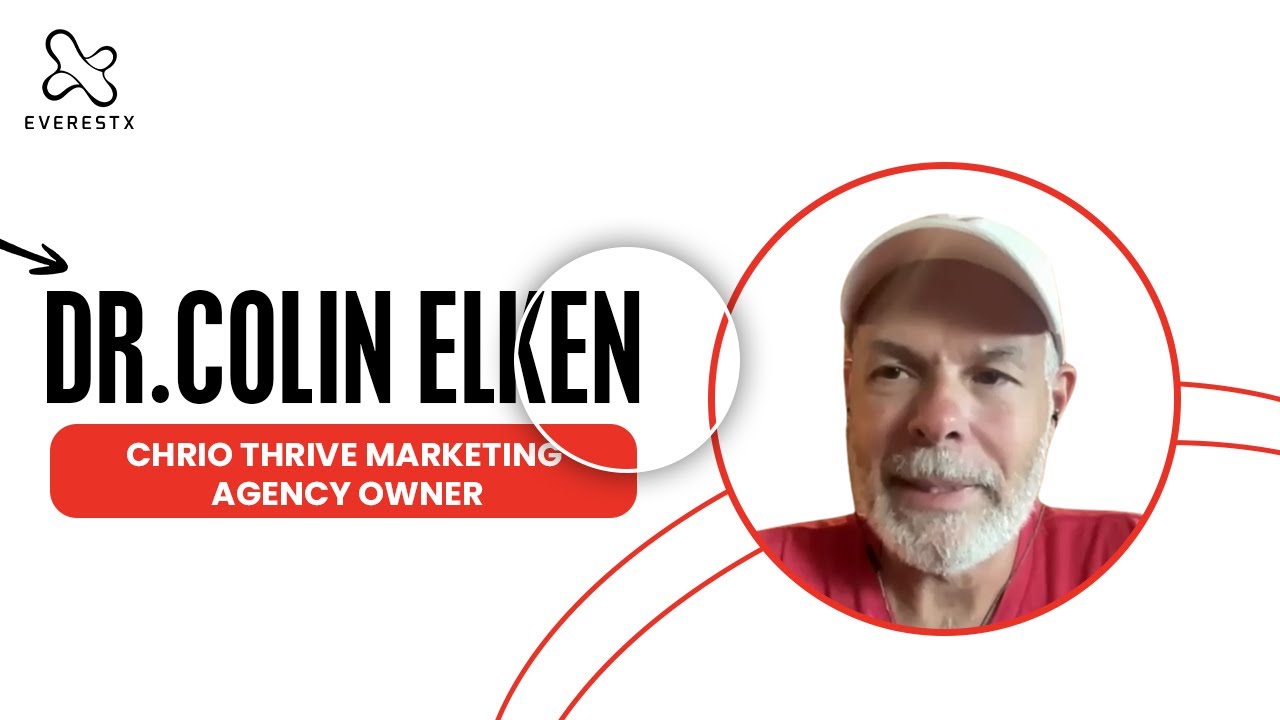
“He really acts as if he’s a part owner of the company. Owns up to mistakes right away, corrects them, and has done some wonderful work for us — frankly, helped us grow.”
Dr. Colin Elken
Agency Owner, Chirothrive Marketing Agency
Hired: Digital Marketing Specialist (Full-Time)

“He was a great team member with us for the last year. Definitely knows digital ads — very responsive and committed throughout.”
Jerry Martinez
President, Sunray Media Consultants
Hired: Performance Marketing Specialist (Full-Time)
“Saved us a ton of time on screening. The person they sent came in ready and picked up our stack fast — has been delivering consistently since week one.”
Rishi Patel
Senior Talent Operations Manager, RippleMatch
Hired: Paid Ads Specialist (Part-Time)
Tutorials
Want to do this yourself? Here is how
Free, step-by-step tutorials covering the tools this role works in. If at any point you would rather hand it off, our specialists are above.
Zapier
When to hire an automation specialist — an honest checklist
DIY Zapier is great until your Zap count climbs past 10 and you stop knowing what is running. This is the honest framework: when the cost of self-managing automations exceeds the cost of a specialist, and how to tell which side you are on.
Airtable
When to hire an Airtable specialist — an honest checklist
DIY Airtable is a great idea — until it isn't. This is the honest framework: when the cost of self-managing a base exceeds the cost of hiring help, and how to tell which side you're on.
Notion
When to stop DIY-ing Notion and hire a specialist
Notion looks easy. Running a real ops system in Notion is not. This walks the honest signals that you have crossed the line from 'DIY is fine' to 'this is costing more than help would.'
ClickUp
When to hire a ClickUp specialist — an honest checklist
DIY ClickUp is a great idea — until you have 60+ Lists, 25 enabled ClickApps, and the team has stopped trusting the data. This is the honest framework: when the cost of self-managing exceeds the cost of hiring.
Ready to Hire a Growth Marketing Strategist?
Get matched with a vetted Growth Marketing Strategist in 48 hours. Try 1 week risk-free — no charge if not the right fit.
48-hour match guaranteed · Replacement at no cost · Cancel anytime